Your trip to Hamanaka Town: A guide to visiting the birthplace of Monkey Punch
Last August, friend of the website and administrator of the lupiniii.club forum, Tsushi, was fortunate enough to visit the Monkey Punch Collection in the town of Hamanaka, Japan.
As the place of birth for the late series creator Monkey Punch (Kazuhiko Katō) and host to the yearly Lupin III festival, Hamanaka Town has been a sought-after travel destination for fans of the series for many years - both inside and outside of Japan itself. Located in Hokkaido in Northern Japan, getting there is no small feat - especially if you are visiting from abroad, and are unfamiliar with the Japanese language. The town is right on the coast and is well known for its strong ties to the fishing trade. Regardless of the Lupin connection, it is a beautiful place, and well worth a visit - and that is where this article aims to help you!
Tsushi has graciously written up a guide with instructions for visiting both Hamanaka Town and the Monkey Punch collection, which is correct as of the 10th of August 2025 (when Tsushi paid their visit to the town)! If you are planning on visiting or just wish to learn more about how to get there, then we hope this article helps you in some way!
Above image taken from the Hamanaka Town tourist board website
Before we get started, please note that bus schedules, train schedules, price amounts, etc ALL might change, even just on a weekday versus weekend. We visited on a Tuesday back in August 2025, which was a while ago now, already!
We took a shinkansen train from Tokyo to Sapporo, which was actually two trains; one that gets you to Hakodate, and the other that takes you to Sapporo. At the time of visiting, this was about 22500 yen (around $140) for one person, one way. You’ll need to buy a ticket for this trip, and it takes about 8 - 9 hours or so. You’ll likely need to plan a whole day for travel - and I suggest bringing some entertainment to keep you busy on the train!
We took this slower, full-day route in order to spend more time in more places along the way. We spent a full day in Sapporo, checking it out and enjoying the area. The next day we went from Sapporo to Kushiro. This was under 4 hours on the train and about 10300 yen ($65). You can also take a bus for about 5.5 hours for half that cost at 5500 yen ($35), depending on your patience and tolerance for bus rides. I booked three nights at our Kushiro hotel. One day to get checked in, one day to see Kushiro, and one day to see Hamanaka.
Kushiro has an airport and even if you fly in, you will probably end up in Kushiro at least briefly. If so, I recommend the Fisherman’s Wharf MOO and watching the sunset from Nusamai bridge nearby. The food in Kushiro was a bit on the expensive side, likely as it's more of a tourist town. Despite this however, the food was really good - or at least, what we had of it. You can save money getting things from little marts / stores, though, if you are on a tighter budget.
Above image taken from the Hamanaka Town tourist board website
Early morning, at 6:30 am on the day of our Hamanaka trip, we headed out of our hotel room, ate breakfast, then walked about 15 mins to the Kushiro JR train station. Ours was a train leaving Kushiro at 8:21am, a local train towards Nemuro. You cannot use IC cards at this station, so we had to buy paper tickets in advance for both directions (i.e. round trip to Chanai Station) at the Kushiro ticket office. The young lady there was helpful and pulled out a timetable we could point to and say our destination, Chanai Station. You want CHANAI station, NOT Hamanaka Station - this is important!
It will be about an hour and 40-minute train ride from Kushiro to Hamanaka, and each way for each person costs about 950-ish yen. Ultimately for two people - a round trip for two - it was about 4000~ yen ($26). There will also be costs for the local bus, so you should plan to have at least that much to have in cash on you. A handful of 100-yen coins should be fine for the local Hamanaka bus. And of course, have cash for your Lupin merchandise purchases, too!
The train was just a single car on platform 4 and had no English signs on the exterior. There is a verbal announcement rotating from Japanese and English however, that states "this is the local train bound for Nemuro". They also ask you to leave via the front door by the driver.
This train was the first place my rental WiFi from the airport struggled hard, aside from in the brief mountain tunnels on the way up there. Sim cards would likely also struggle due how remote some areas were, so be sure to have some entertainment ready that doesn't require the internet. The train ride was very scenic though, and we were visiting in early fall so it wasn't too cold. The trees were starting to change color, and it made for some truly breath-taking scenery. You can enjoy the wetlands, forest, streams, farm fields and ocean! Maybe you won’t need that in-transit entertainment after all… just look out of the window!
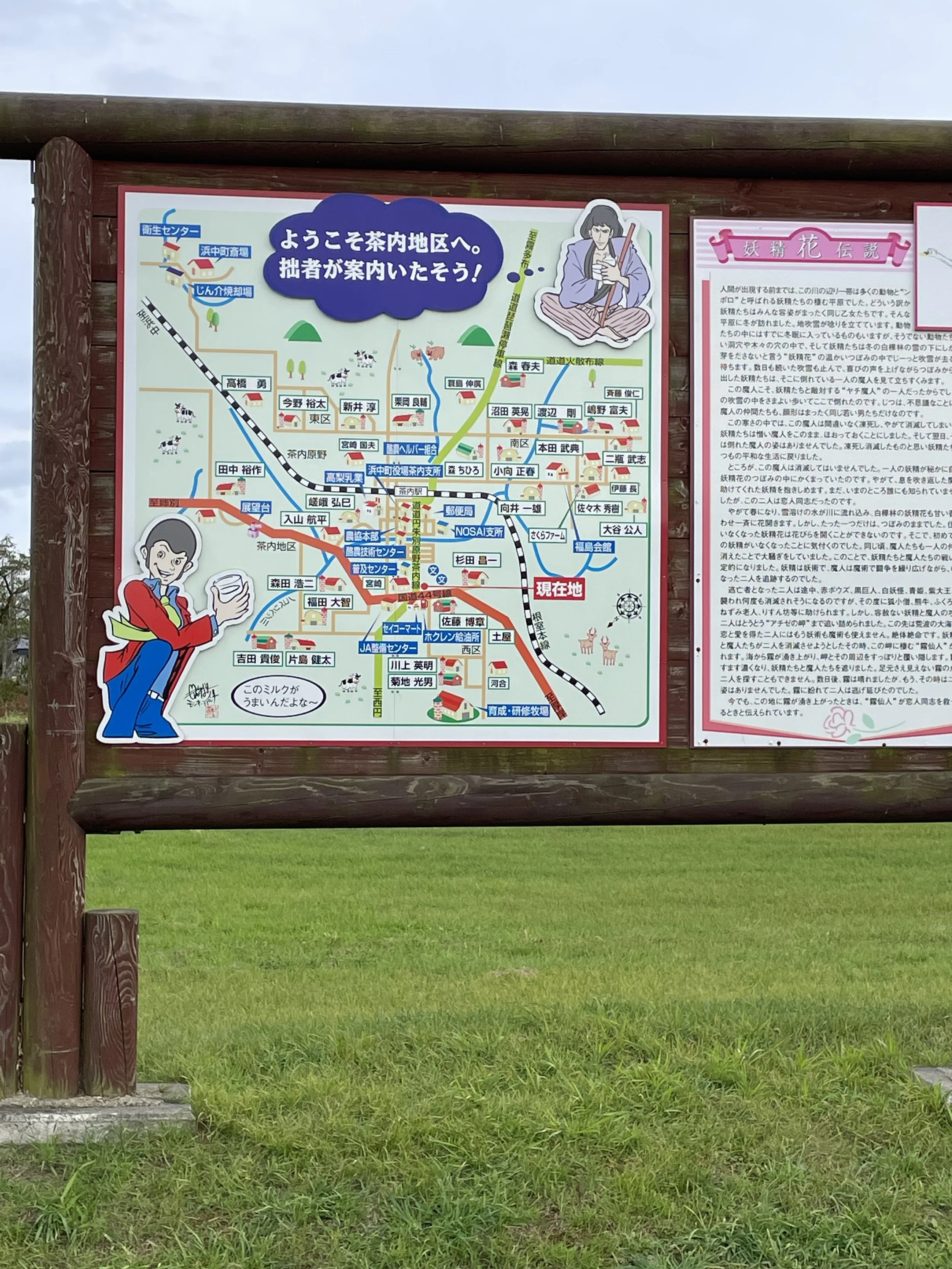
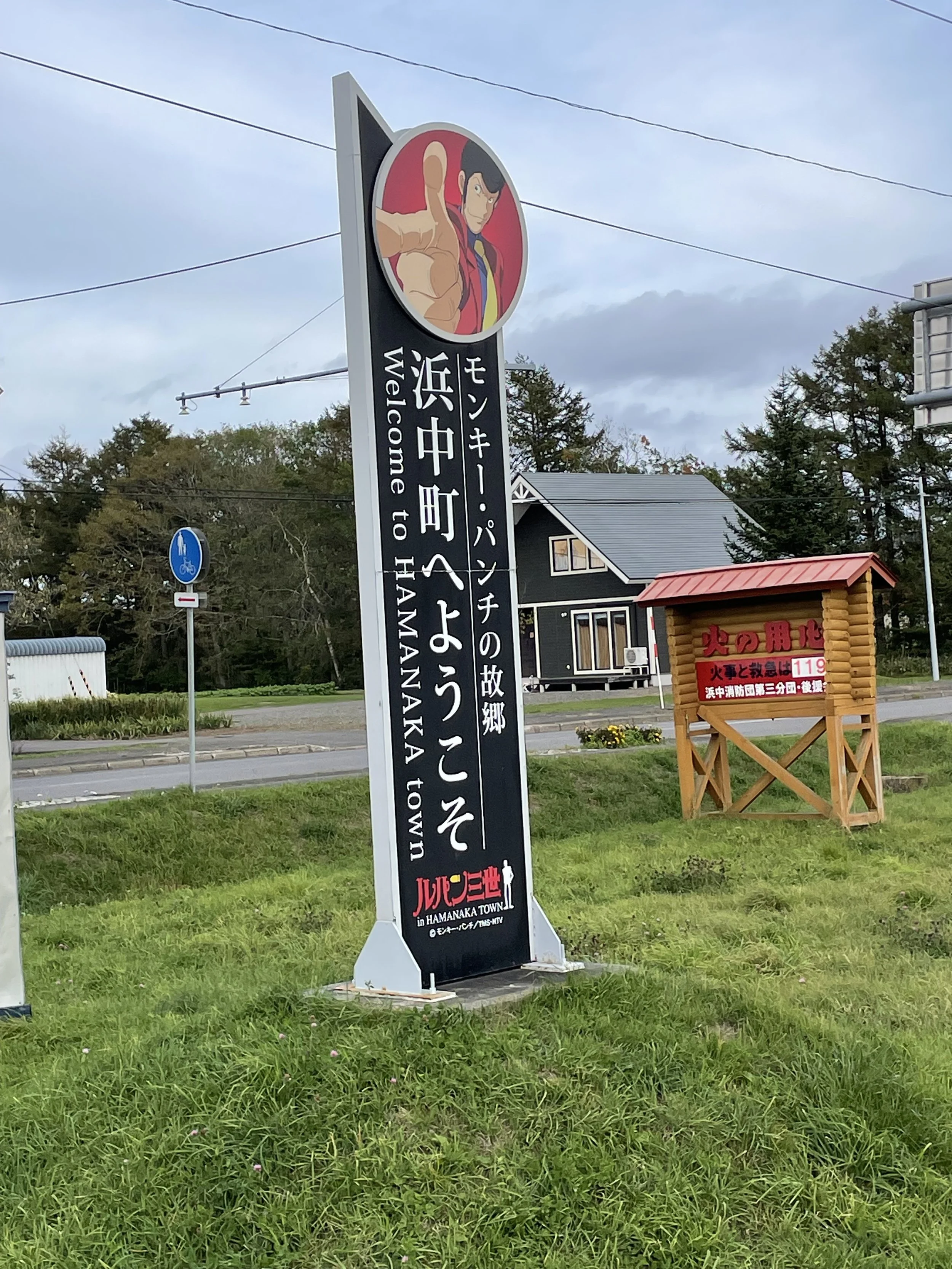
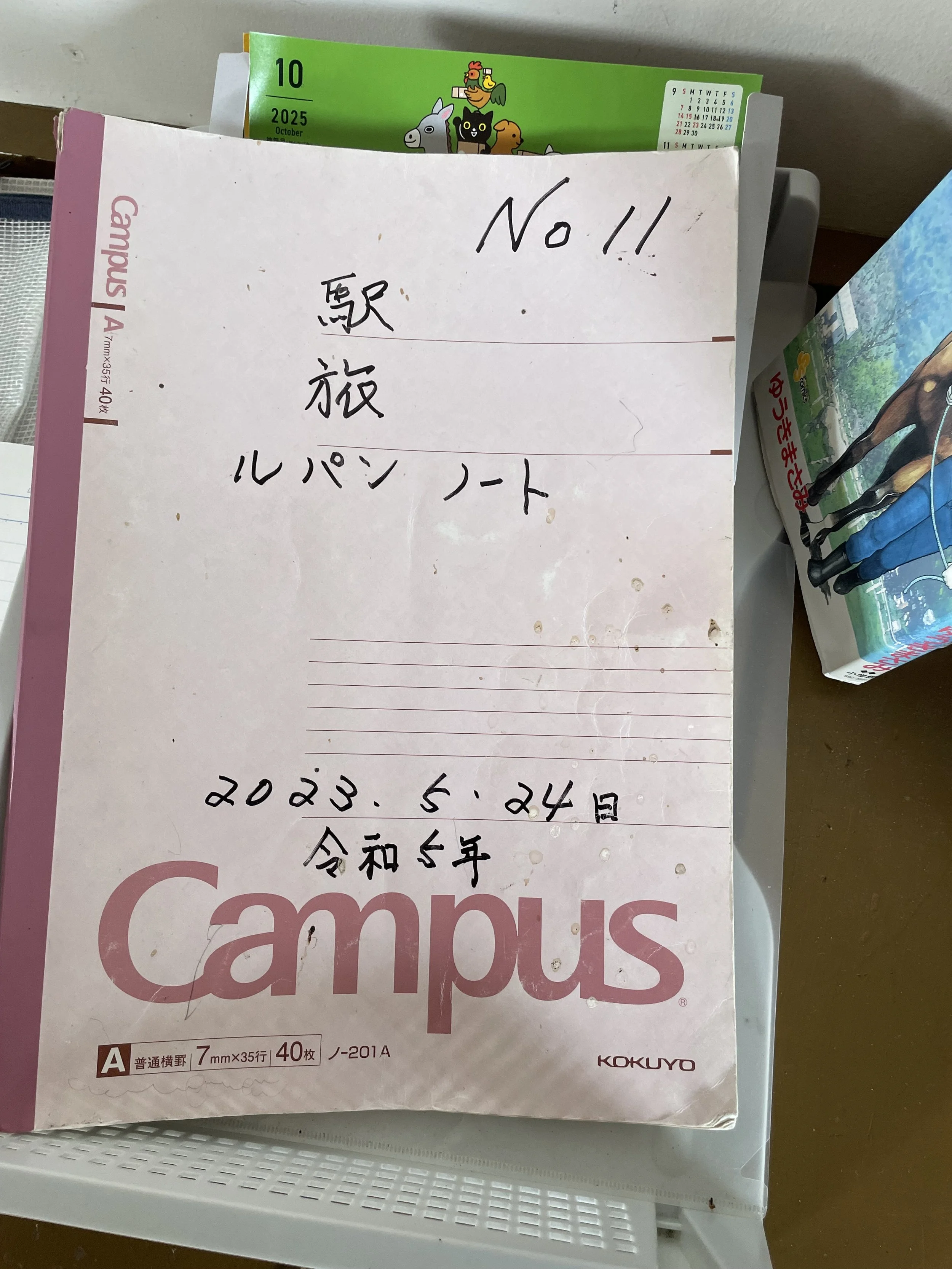
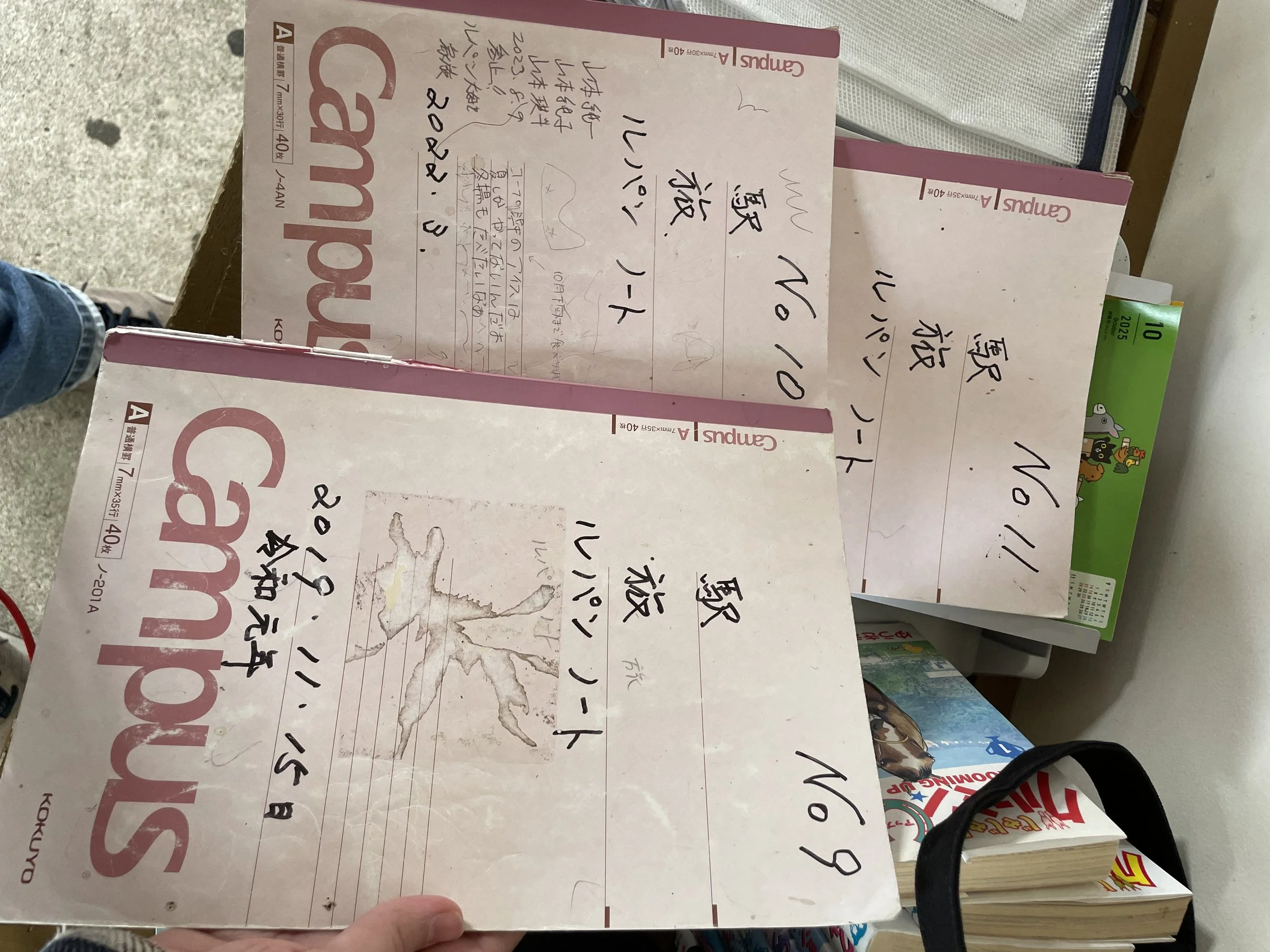
Stopping at Chanai station, we immediately saw Lupin items upon disembarking the train. Inside the Chanai train station were special Lupin visitor guestbooks, labeled ルパンのと on the front. Many people write or draw in the book and date their visit. The books were dated back to around 2016 and were filled with all sorts of cute doodles and love for Lupin III. It became apparent to us that some fans even make multiple trips! There is also a map board for "Lupin Spots", pointing out where you can find Lupin related stuff dotted around the surrounding area.
From the station, you need to take a bus. The bus leaves from the station about 10 minutes after the train arrives, and it takes you to the Yuyu onsen as its end point. You need to tell the driver where you want to stop as you enter the bus. We said "Yuyu Onsen" and got there just fine. The fare was 200 yen ($1.20) for about a 30 - 40-minute ride.
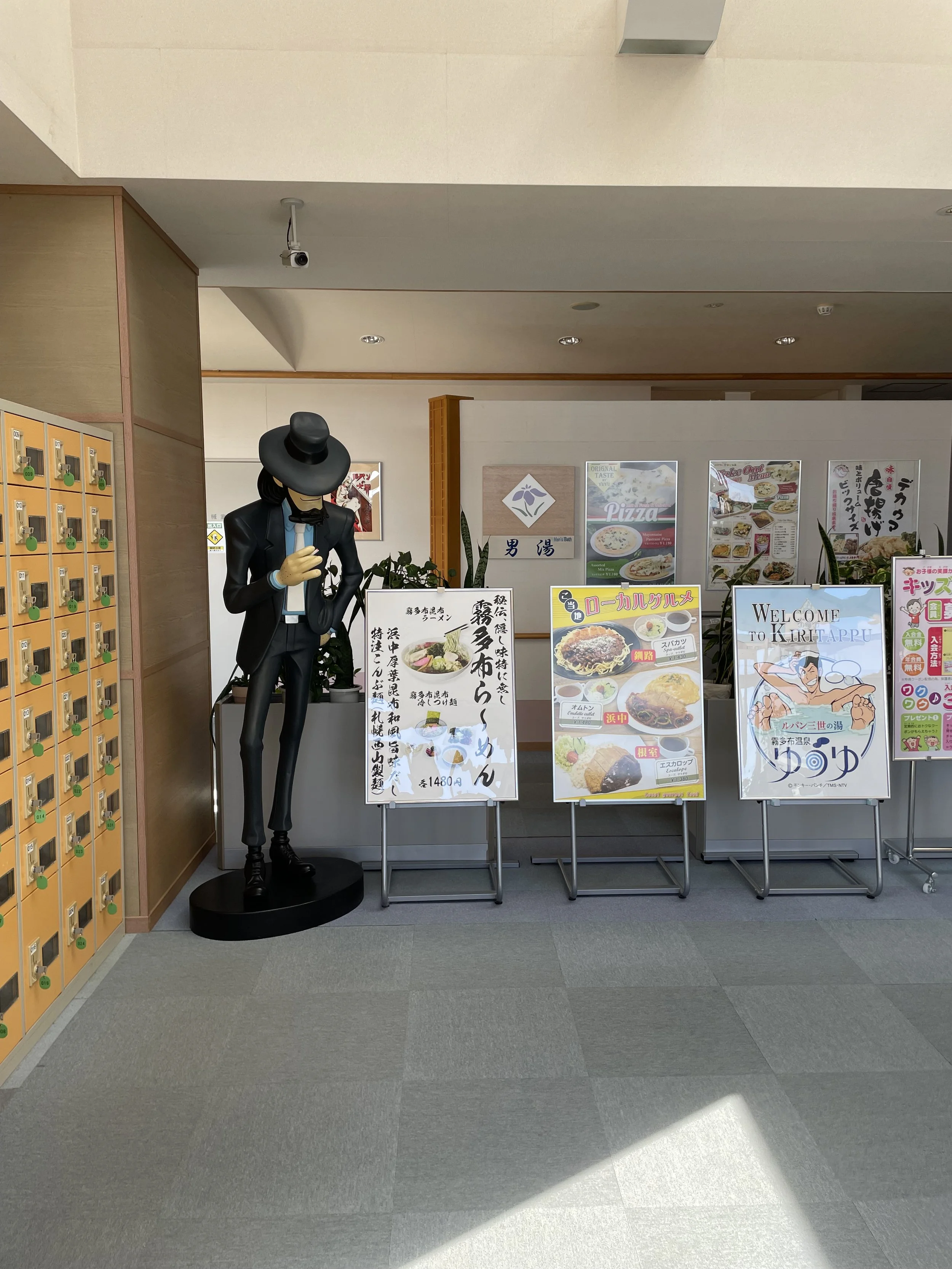
The onsen building is large and impressive. It's a community centre as much as an onsen, with an arcade, an area for children to play, and a place that serves food from 11:30am until 8:30pm. It's open for baths from 10am - 10pm, and I think there are more Lupin decorations in the bath area. However, my partner and I both have large tattoos, and I am also NB trans, so I cannot go into most onsen baths. This is as they are often divided by "male" side and "female" side. Regardless, this is apparently a nice outdoor bath house with a great view!
Side note about onsen / public baths in Japan: Most places strictly do not allow baths for people with tattoos. It is safe to assume people with tattoos are forbidden to use the bath in the majority of places. If you plan to use one, you should research in advance about the allowance of tattoos. Private bath rentals are an option in some places, and for my tattooed trans pals out there reading this, you might want to research that option for trying that!
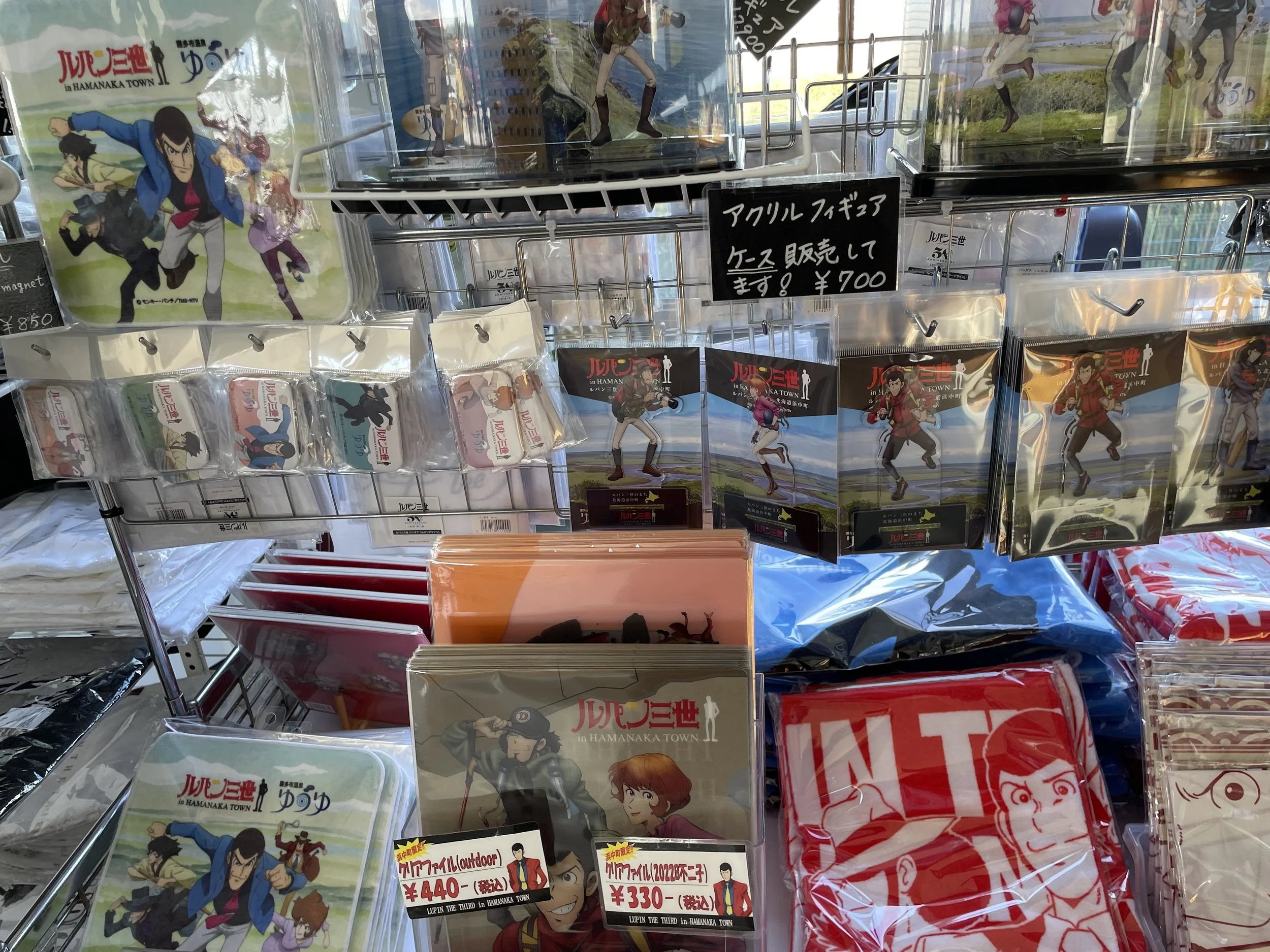
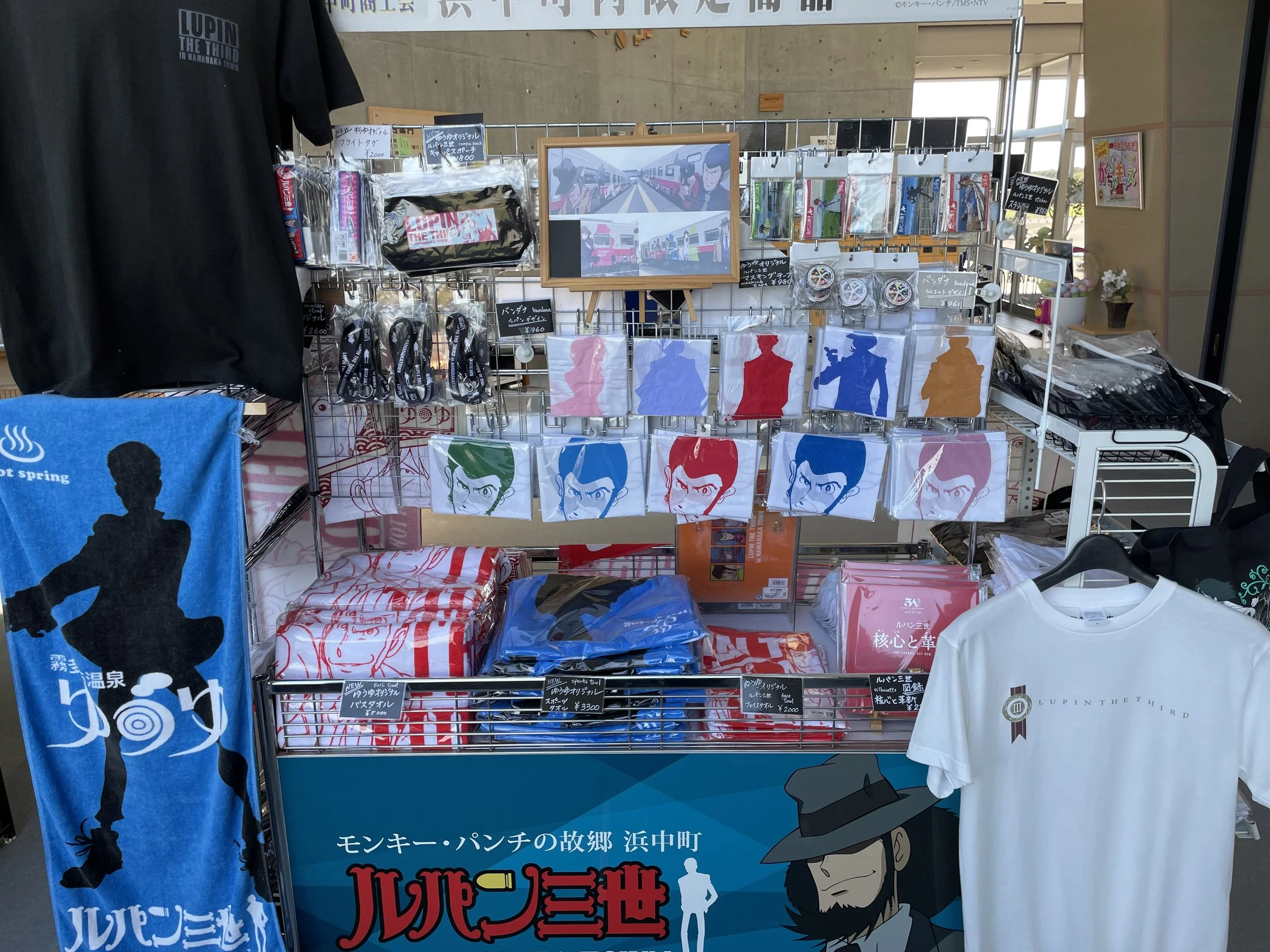
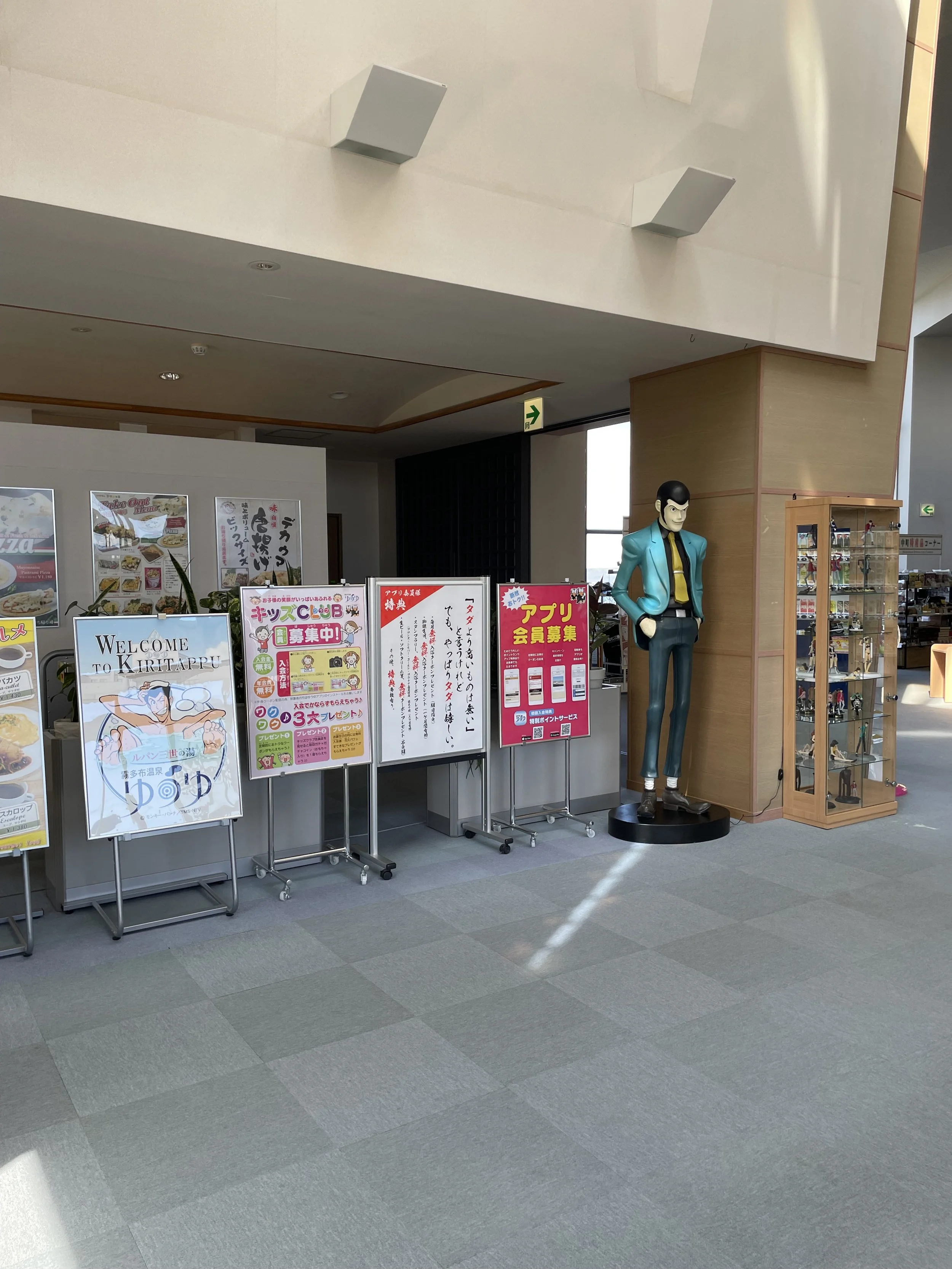
Inside the Yuyu building is the main place to buy Lupin stuff, they have an enormous stand filled with shirts, towels, hands, standees, tengui, stickers, magnets - all kinds of stuff! I have included some of the photos in this article. The Jigen standee was sold out, and yet again I am deprived of my boy…
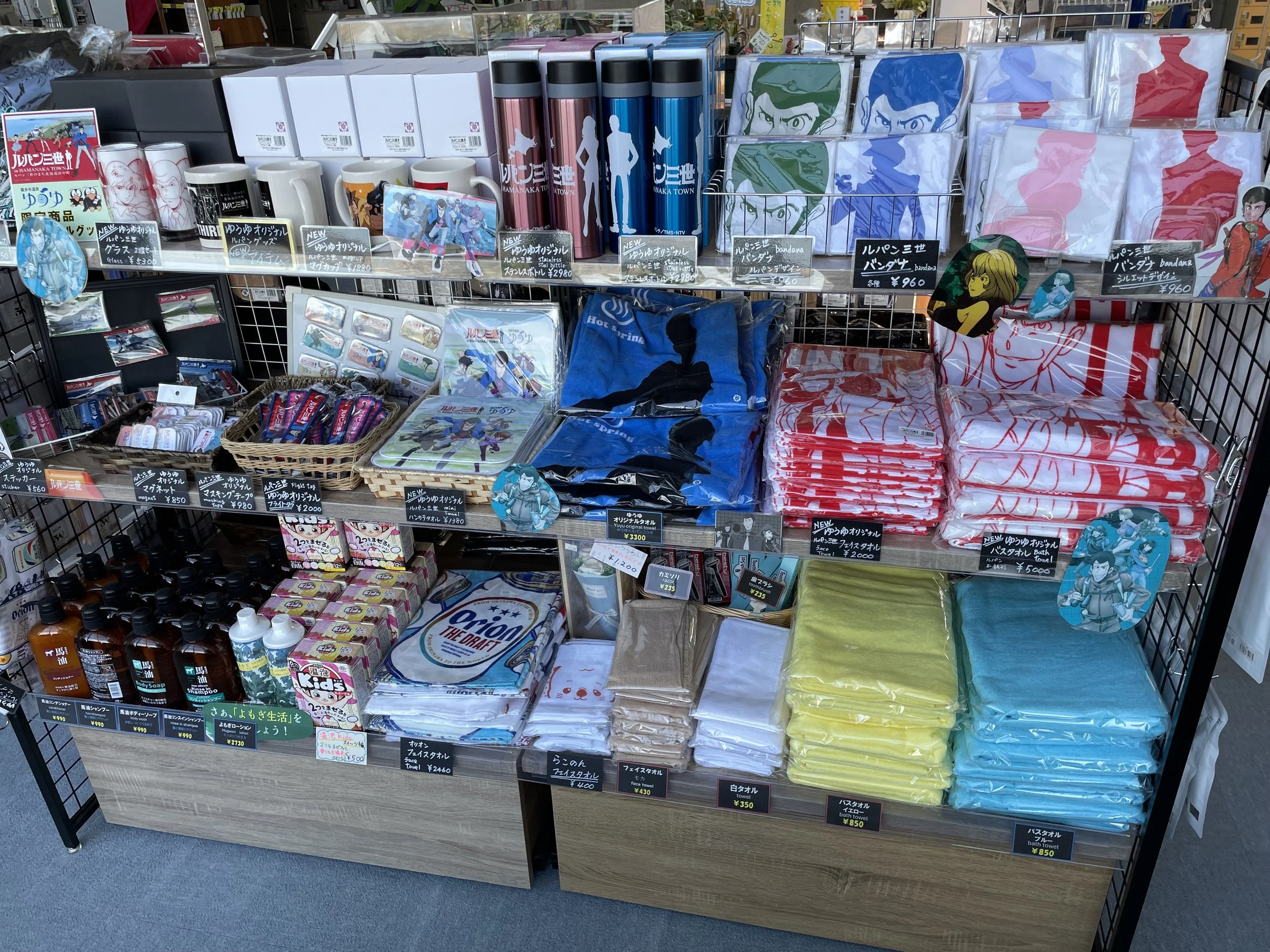
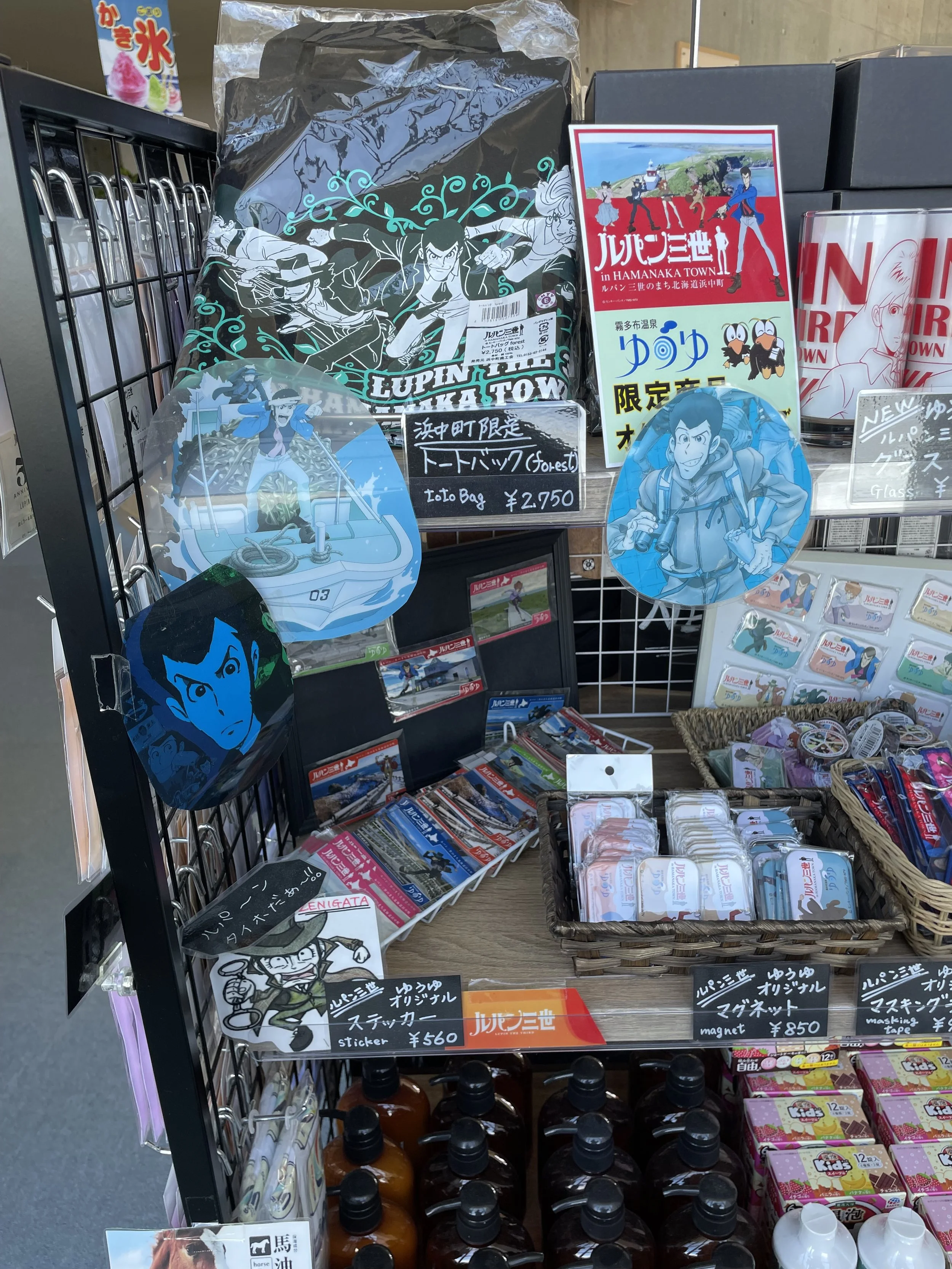
In Yuyu and a few other spots in the area you can buy Komatsu Milk, which is from a nearby dairy on the coast of Hamanaka. You can even visit the dairy yourself, if you so fancy. As we were travelling on foot, we didn't have time to walk that far - but with a car it should be easy.
I am not a milk person, and I think they have raw milk? This sounded too risky, for me personally! Hokkaido is an area prized for its milk and fruit production, and most places proudly show off their milk. I tried a small sample of some raw milk cheese, and I personally did not enjoy the flavor. It was sweet, savory, and a bit musky all at the same time. If you're a milk fan, maybe you want to try it? It's cheap and fresh at least, served in glass bottles with paper seals, very traditional.
I've included our merch haul to show you some of the stuff up close
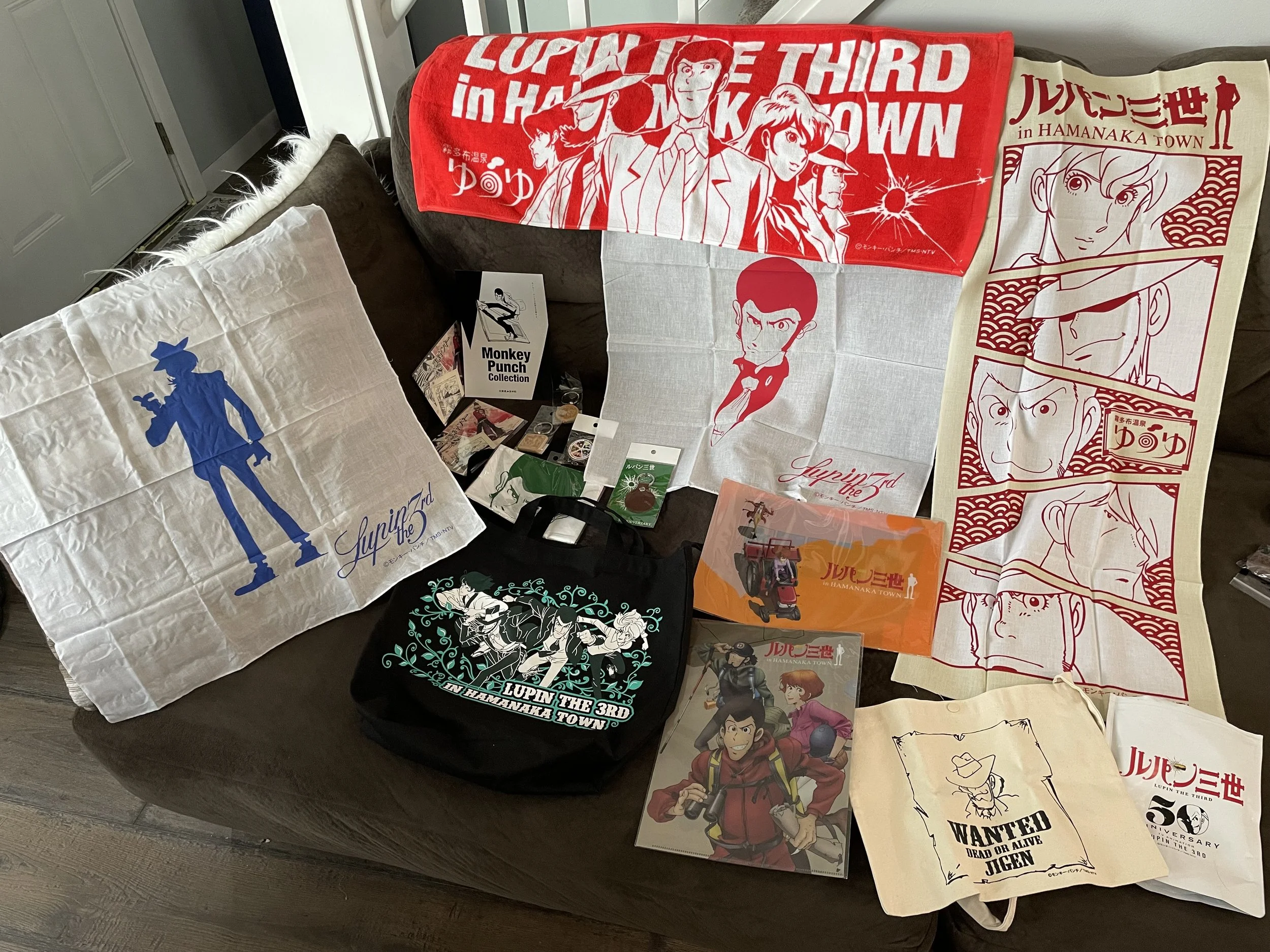
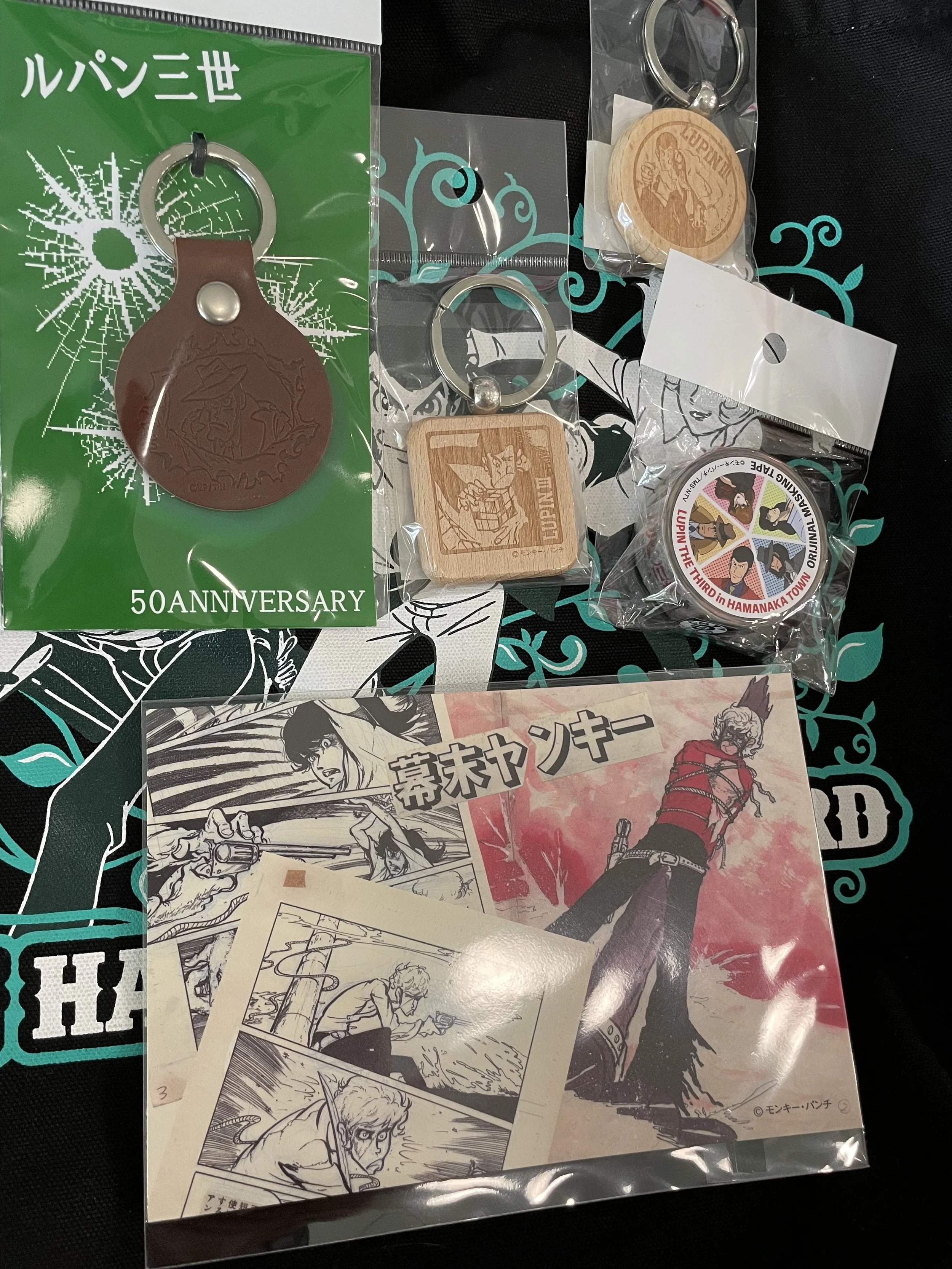
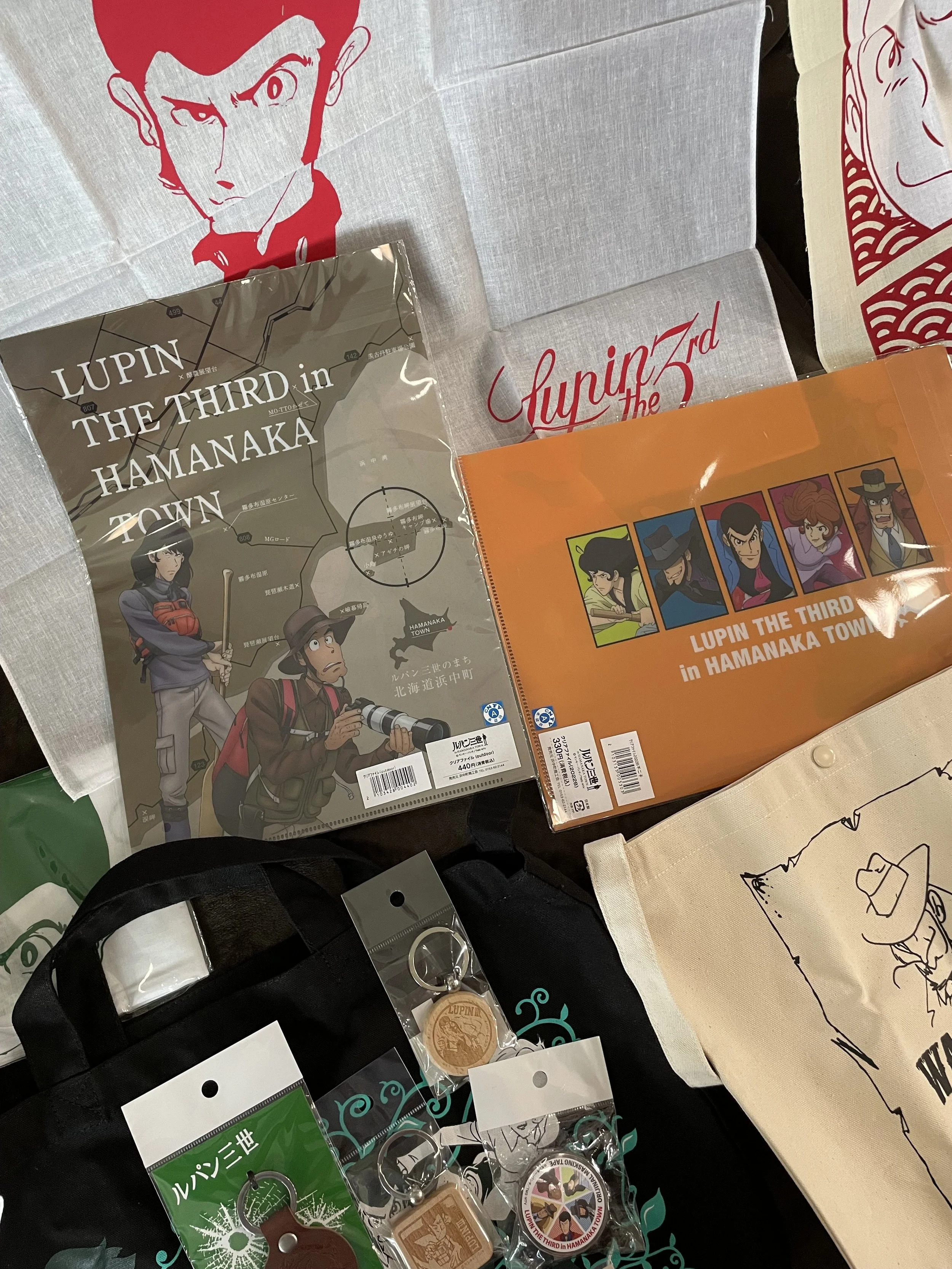
I would also like to share some rough maps of our walking route. I would say this plan will only work for decent weather conditions, and people who have no issues with a long walk. Ultimately, we did the "main route", seeing Yuyu, the character street, the Monkey Punch Collection, and the Government building (more on this later) in about 8,300 steps. The walk we took had some downhill slopes and a set of very large stairs.
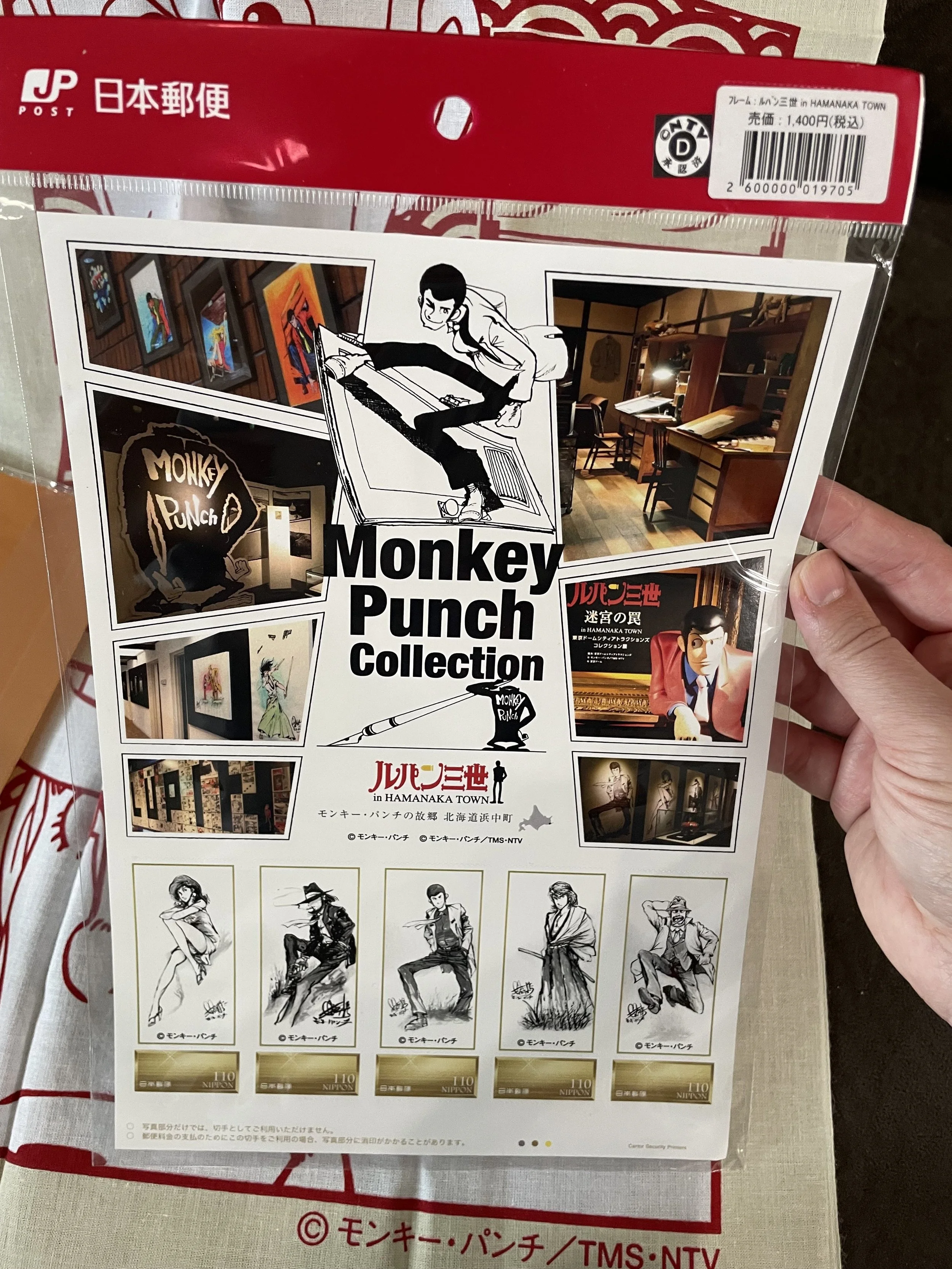
I added another route to see Goemon’s shop by stopping at the Seicomart stop on the bus and then walking the rest of the way back to Chanai station. We did encounter a few other spots and, on the route, we passed a post office that had Lupin stamps for sale! That added about 2k more steps to our journey.
We passed a shop near the train station that had Fujiko by the door and seemed to sell home related goods. Sadly, due to it being closed at the time we were there, I cannot report on that. It looked unique from the Yuyu merch, though, so it may be worth a visit! There might be even more things hidden around in businesses found in that area. The place is so spread out; with more time and a car you could likely find more Lupin goods by having a good stroll.
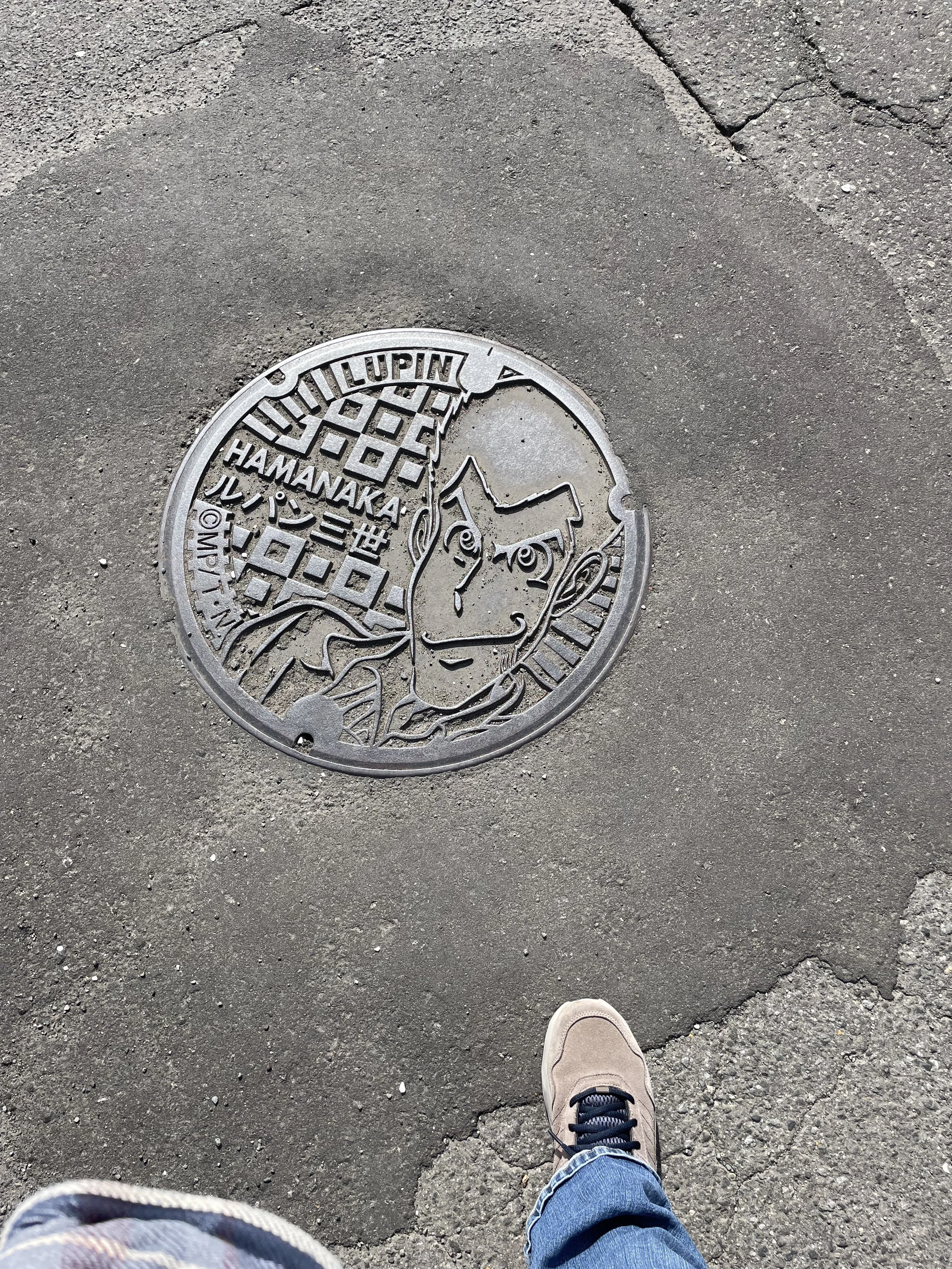
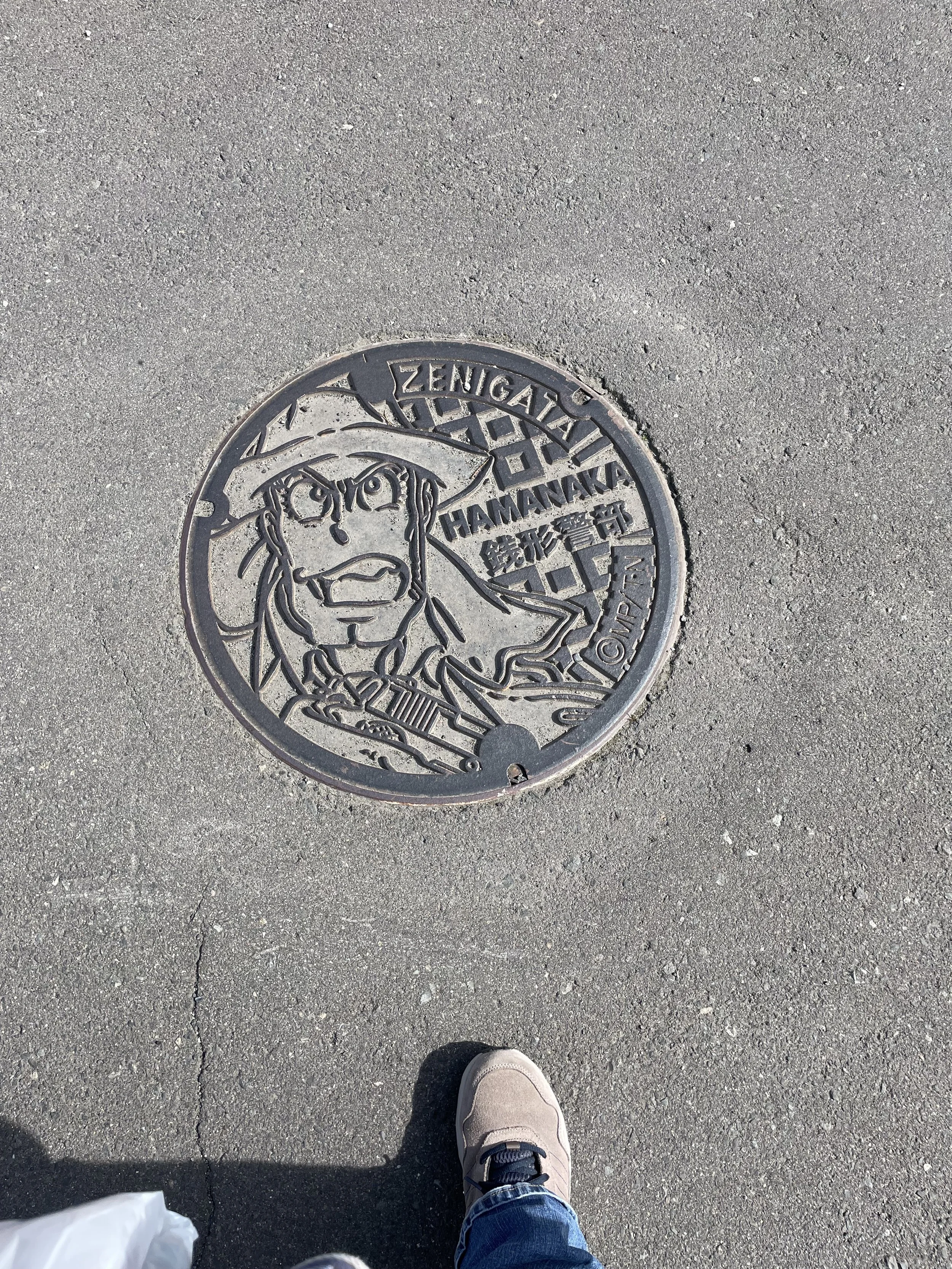
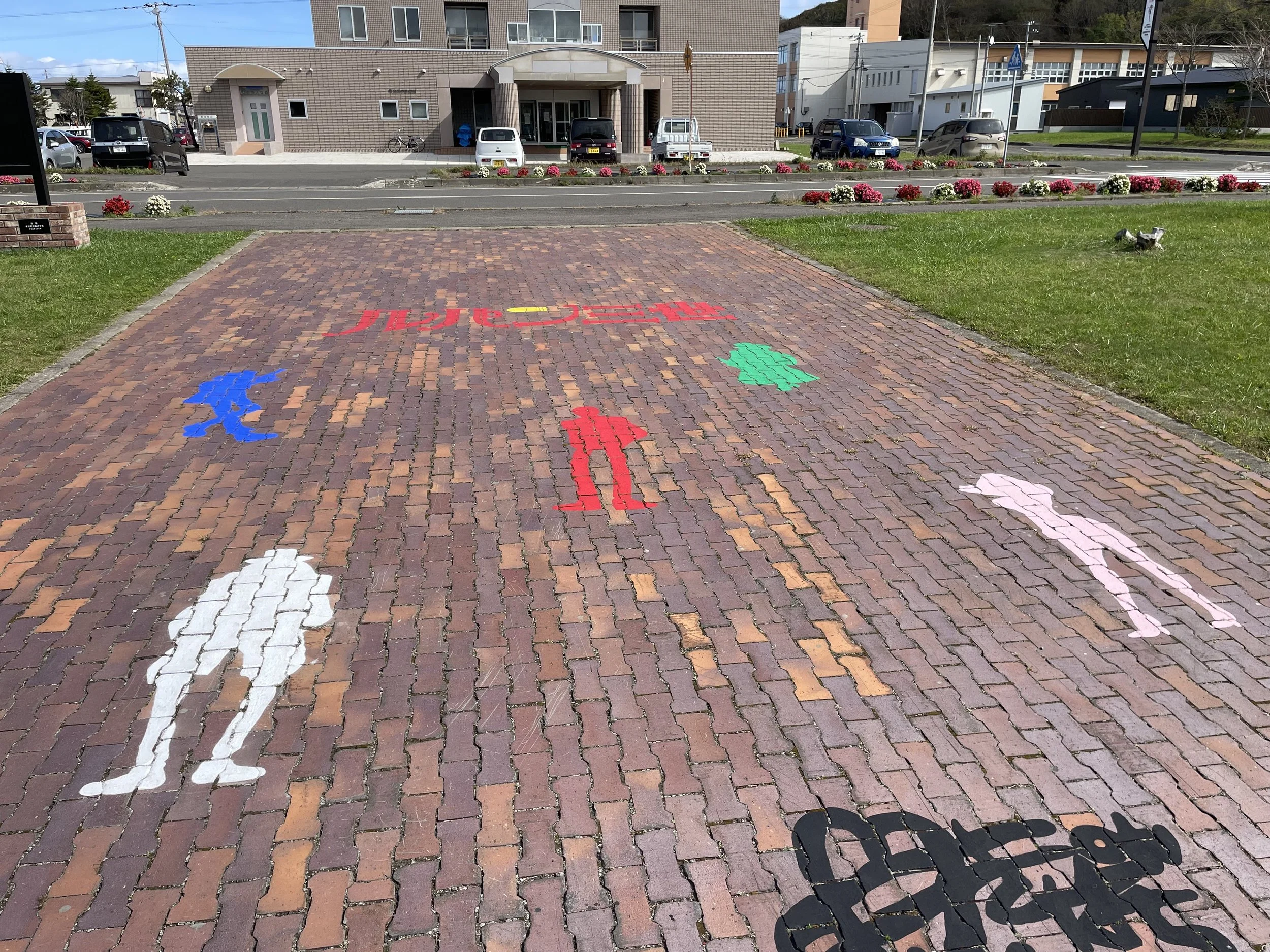
On the character street, you can check out Jigen's Bar, Fujiko's Club, and the manhole covers sporting images of all the characters. I missed a photo opportunity with Fujiko by accident, since we were walking fast to keep a good timeframe to meet the bus. I think Zenigata might have something elsewhere in town too, but I sadly didn’t catch him.
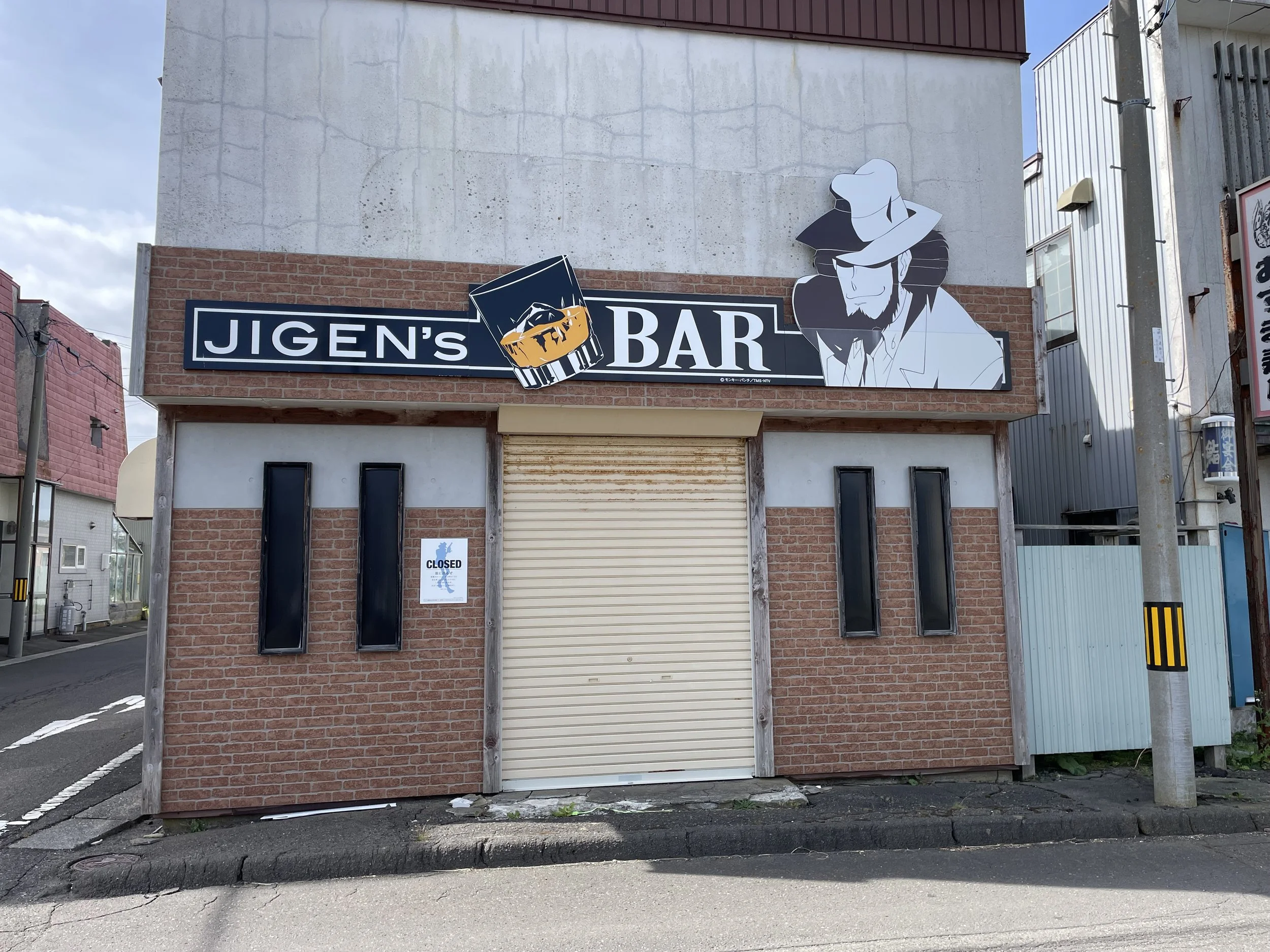
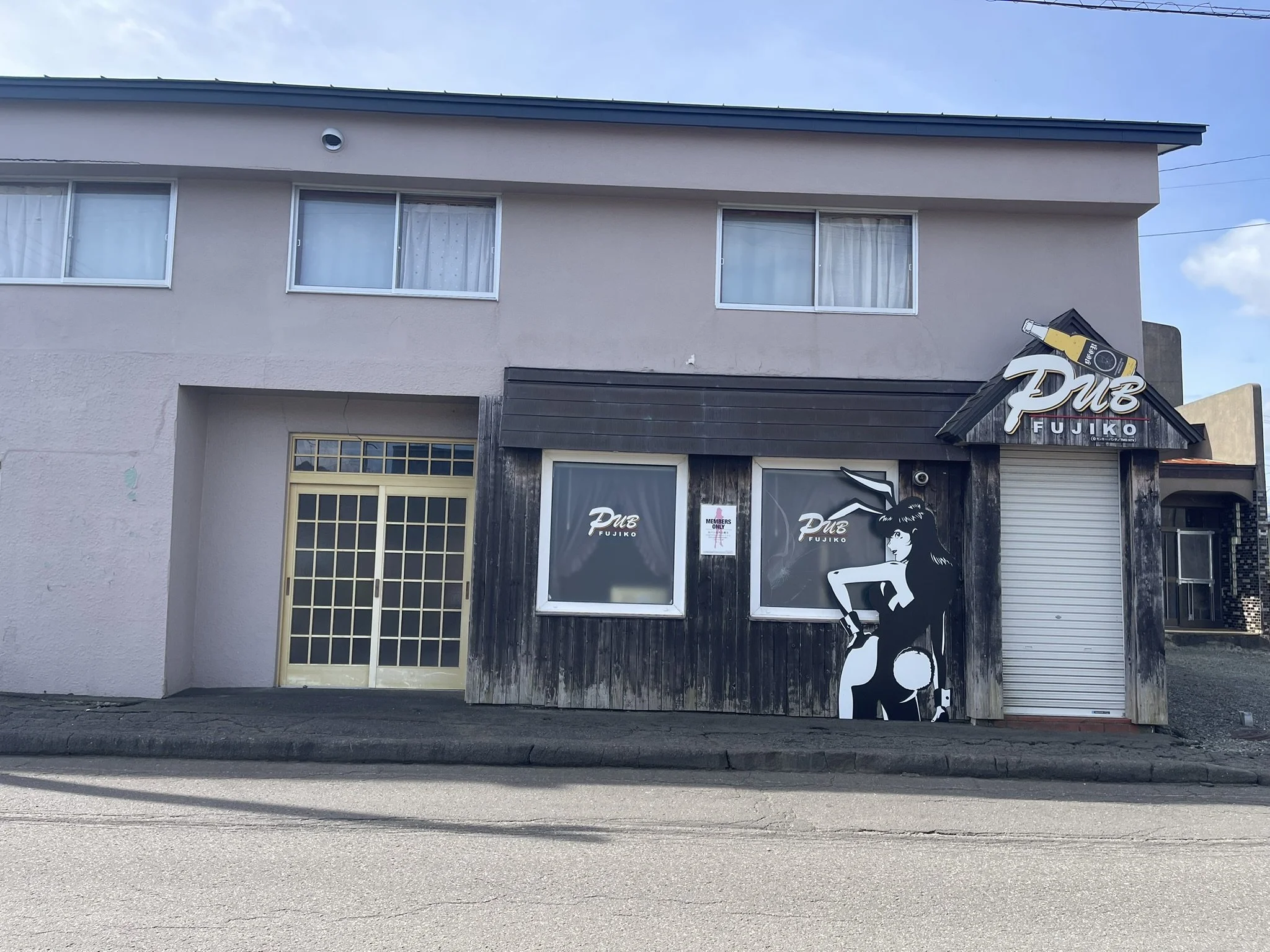
There is a clerk at the front left of the building for the Monkey Punch Collection, and he asked us to sign in with our names, gender, ages and country of origin. The form up front has only male or female. I circled the dot between the symbols.
However, I am pleased to say they had a visibly marked queer friendly bathroom in the lobby (the first one I had seen in Japan, no less). Their in-depth survey upstairs did have the option to put gender "other", as well.
No money is required to enter the museum, but you can donate money to them.
I would encourage you to do so. They maintain a lovely building and keeping it afloat for others to come see is good for our fandom. They will even give you a free pamphlet that talks about the exhibit, too!
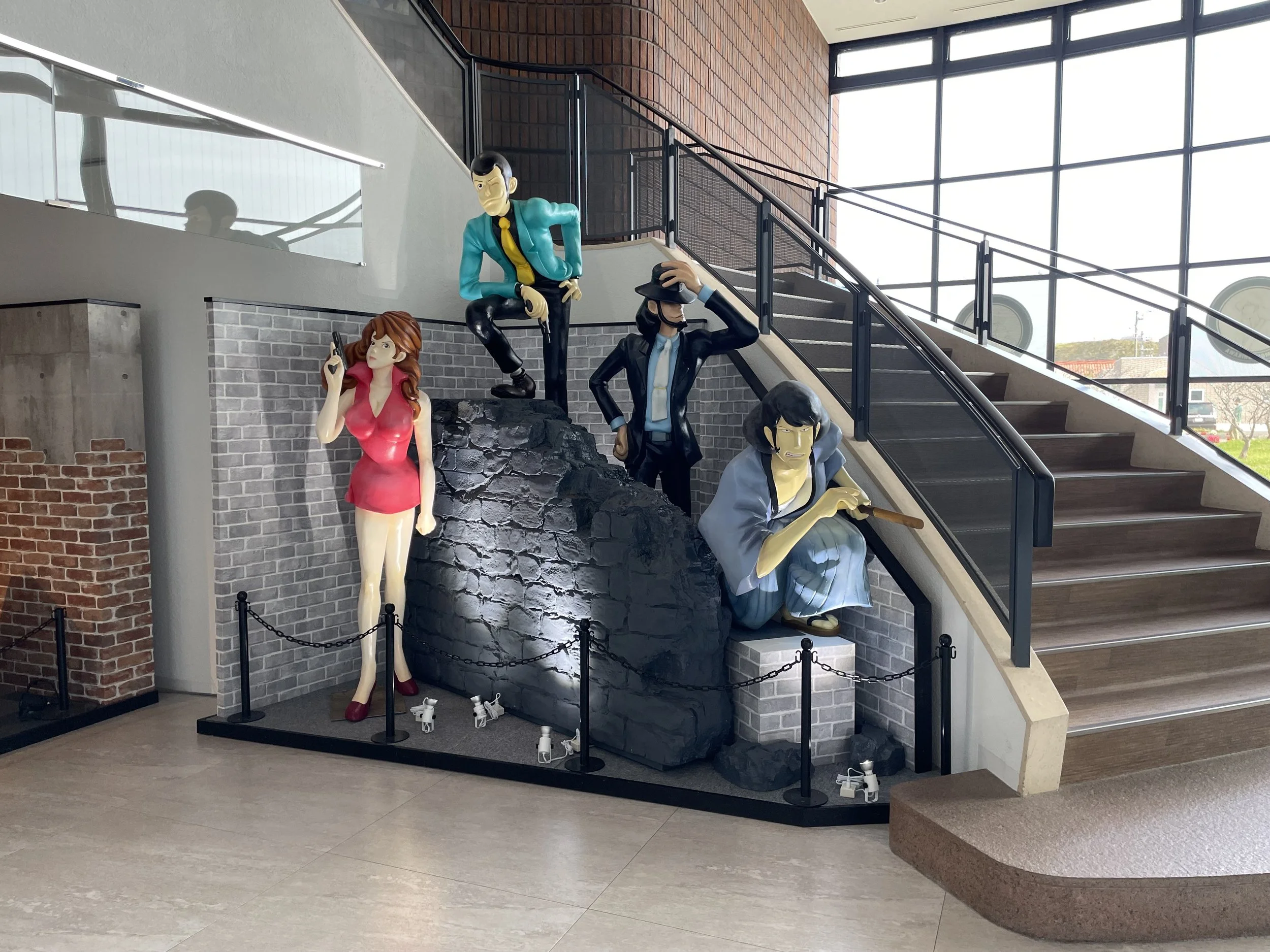
Downstairs are various sculptures of the gang, and the Fiat 500 in all her glory, with some fun paint splatters on it to simulate Lupin and company having driven it down a muddy, dirt road. Up the stairs are Monkey Punch framed illustrations - all originals, so you can admire the paint and linework. The hallway is lined with large canvases of the cast. These are reproductions which have been enlarged, rather than real paintings which were done in 2011 by Katō-san - presumably for the museum itself.
At the end of the hall was a large Mamo promotional display, and a desk for the aforementioned longer survey. It asked a lot of questions about your visit, such as how you heard about it, how you visited (train, car, bus, etc), how many times you have been, and how they can improve. If you fill it out, they give you a postcard. Ours was of Bakamatsu Yankee, which was cool!
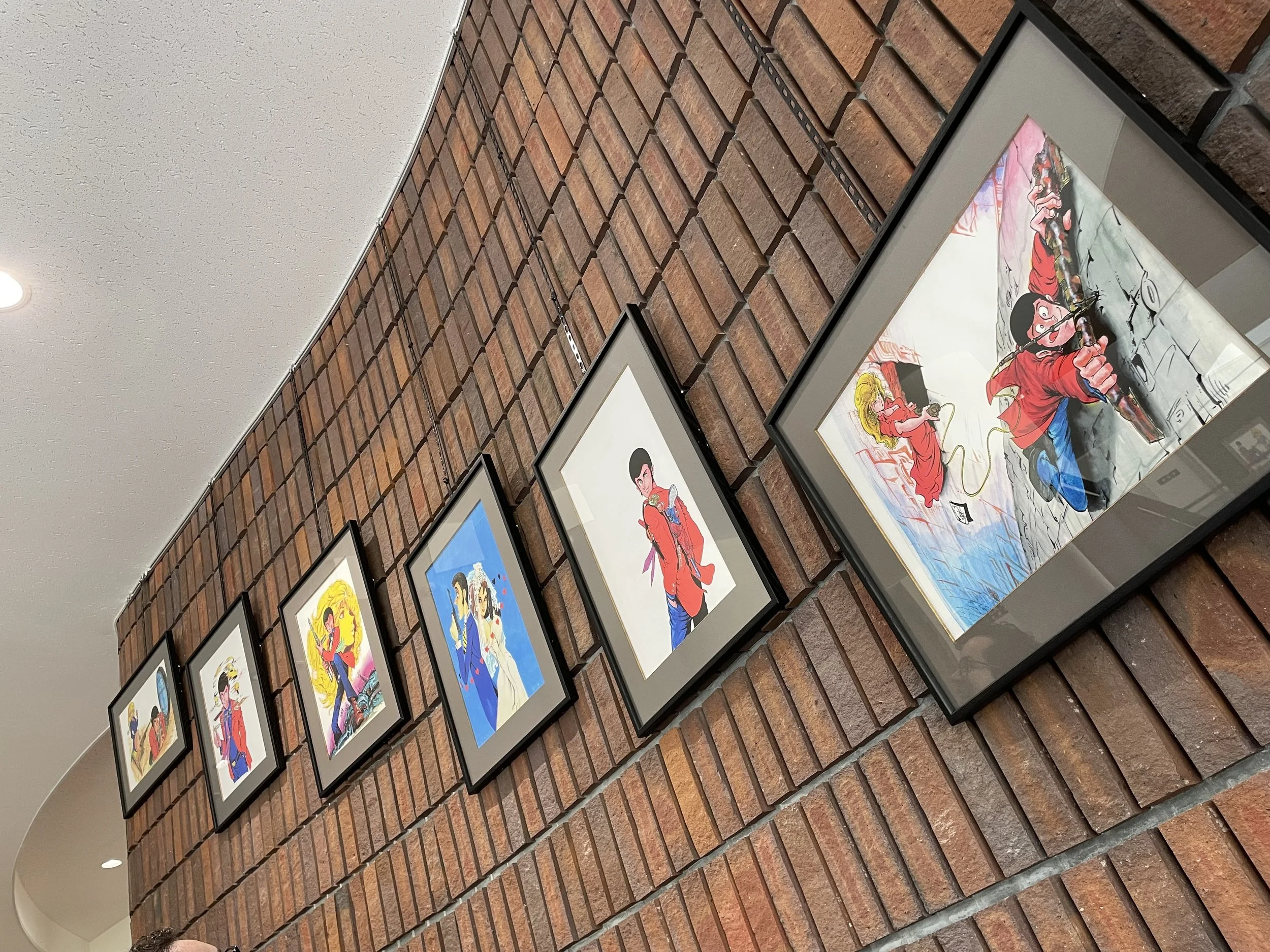
The collection area itself had some lovely, choice music tracks from the series playing over the speakers. These were not the most common versions of the songs - they sounded like specially chosen variants. I didn't recognize which movie or CD they came from, so I wondered if some might even be special, exclusive tracks for use in the museum, though I can't say for sure.
The museum has lots of photos of Katō-san, a timeline of his works, some of his personal items - such as cameras, mugs, paints, etc - a collection of Lupin themed zippo lighters, and a photo opportunity spot with a statue of Lupin. There is even a recreation of Monkey Punch’s personal workspace, which included various awards he had won, and even fun little recreations of artifacts from some of the Lupin III episodes and movies. All of this could be found alongside lovingly framed and reproduced pieces of his comic work.
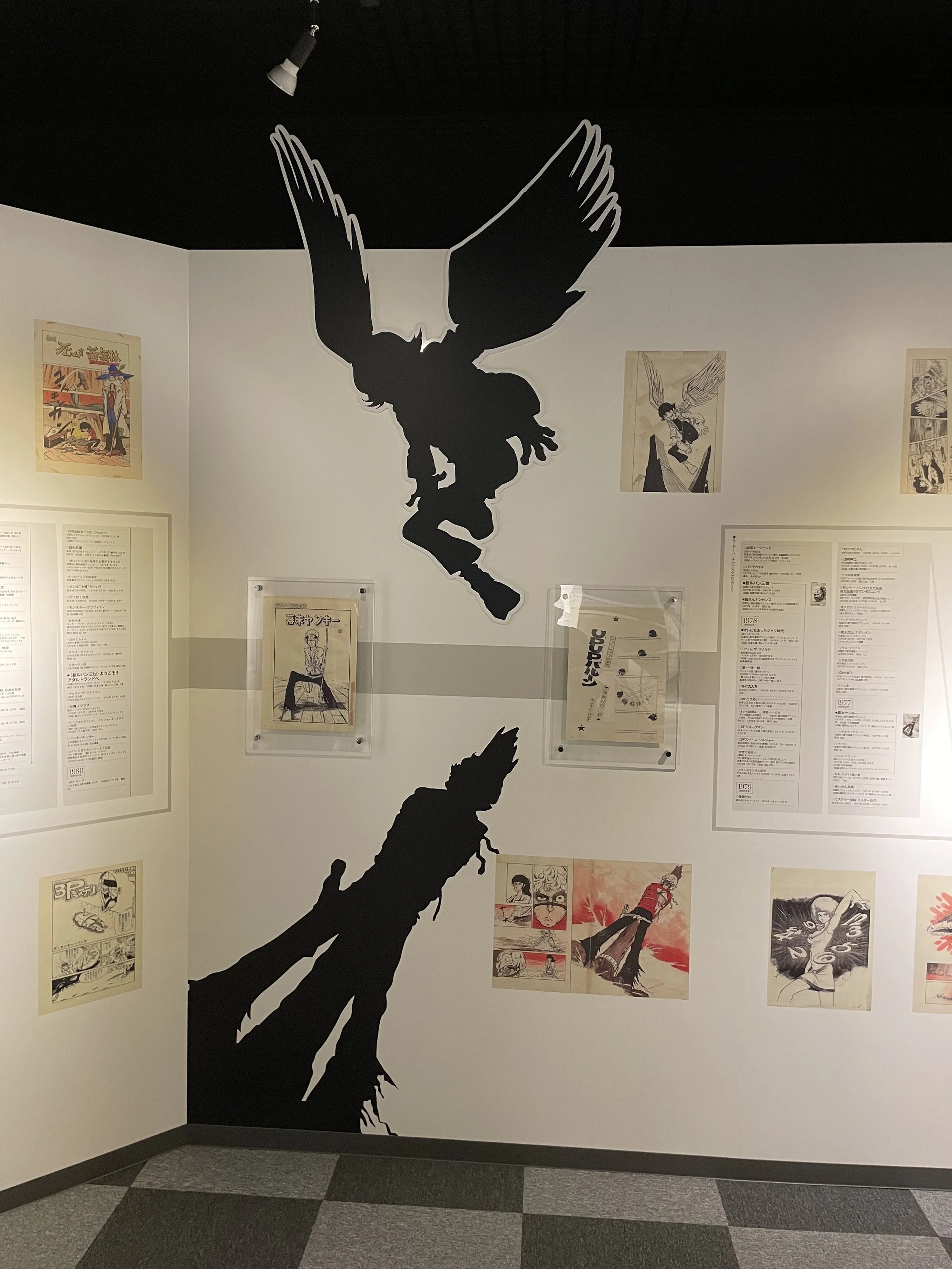
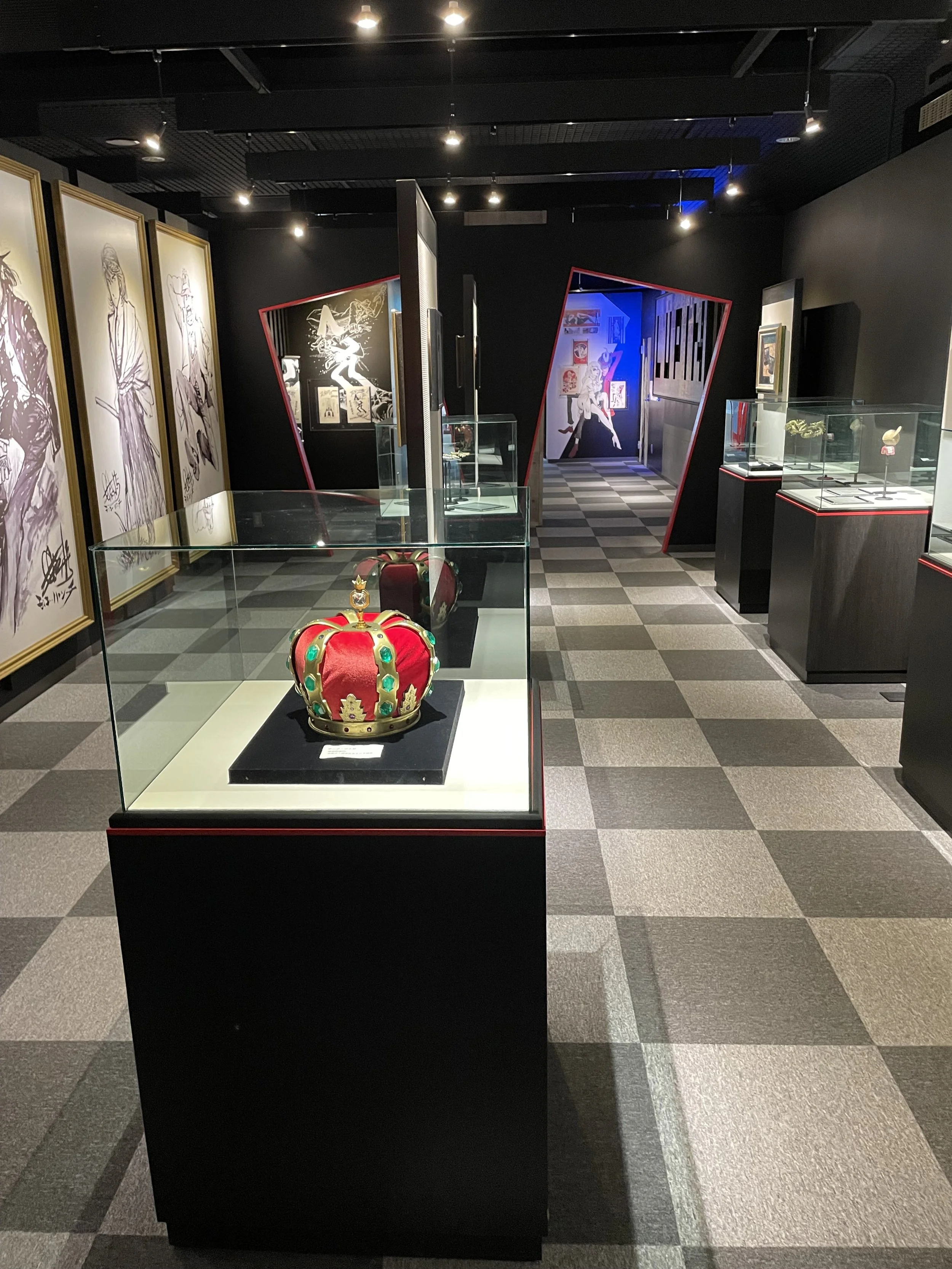
Most of the original comic pages were behind glass and were difficult to get good photos of, as a result. A few of the original pages were out for viewing, though. These appeared to have aged and looked fragile. Very awe inspiring to see the original paint, ink, and pencil work of Monkey Punch himself!
We met a man from Laos in the museum who said it was his third time visiting, and that he loves The Castle of Cagliostro. I wish we had been able to talk to a few more people there. I need more practice with my Japanese speaking, because I would love to converse more in general. The museum wasn't overly busy, but it also wasn't entirely empty. I would say in the hour or so we spent inside we saw four or five other guests.
As far as I can tell there is NO gift shop in the Monkey Punch Collection. Personally, I would have gone nuts for some art postcards, and if anyone from Hamanaka’s tourism board is reading, I would recommend that as an option for something to purchase for the future. Maybe I simply missed where it was, or maybe they only have things for sale during the yearly Lupin III festival.
We left the collection and curved up the hilly road and took a LONG stairway up the hill to the government building. The building was noted as a Lupin spot, but we were in a bit of hurry and only saw a little piece of artwork of the gang on the directory. I wouldn't call it worthwhile if you're tight on time, but maybe there is more in the building itself? We didn't have time to explore, essentially just walking in and then out. As it was a normal government building with people doing their daily jobs, we did not want to intrude.
To accommodate the bus and train schedule, we had from about 10am to 1:55pm to do our full route. In theory, we could have left on the Yuyu 4:50pm bus to the station, then waited around until 8:19pm for the last train back to Kushiro. We didn't want to risk being stuck in Hamanaka with no train back to our hotel if we missed it. To avoid that, we took the second to last train at 5:28pm, just to give ourselves wiggle room in case of mistakes, or an issue with the transport.
Hopefully my instructions and how long it took us to explore helps give you an idea of what there is to see in Hamanaka.
If you can, I would encourage you to carve a bit more time out of your trip, and to take it slower, as we likely missed things during our visit. The bus schedule is different on weekends, weekdays, and holidays. Timing your bus to get to the station before the train arrives seems fine, but you always want to allow some buffer time in-between, as trains are more likely to run on time than a bus is, and you wouldn’t want to miss your connection. Always give yourself a flexible contingency plan when traveling in remote areas.
The Hamanaka Lupin III festival is usually in late September / early October each year. They often have events, staff / voice actor appearances, and other stuff especially for that weekend. Someone else will have to go and report on that for us in the future, as sadly we missed it during our trip. Hey, who knows, maybe I will go back and see it... eventually. This guide is mostly intended for visiting outside of festival times (although, we actually only missed it by about a week!) If you wish to attend the festival, the best place to check for tickets and dates would be the official Facebook page. Be aware, though, that they usually announce it without much time to plan - sometimes only a month or so in advance.
Other ways to get to Hamanaka
Renting a car! Driving to the area seems to be the most common way to get there. Those with a U.S. driving licence can get a permit for driving in Japan before you leave home on the trip, and Kushiro has rental cars. Be aware, though, that you cannot get the permit once you are in Japan. Look into that ahead of time if you want to drive whilst on your trip.
Hiring a car! There are a few character wrap taxi cars you can hire, and the phone number for these is on the Hamanaka Lupin website. Although I didn't feel confident enough in my Japanese to make the phone call, we did see these character-wrapped taxis parked while we were walking!
There are a couple homestay / air bnb type places in the town, and a campsite by the Yuyu Onsen - just in case you are more confident than me in dealing with missing connections, or other setbacks. That, or you're better at Japanese. Maybe a rental camper could work for this option if you have a driver's license, permit, and rented a small camper vehicle in Kushiro. Below is a sheet in the train station about staying in Hamanaka, showing some of the local BnB type places. These all appeared to be small places, that involve you staying in someone’s home, rather than a western style hotel.
Route by rail! Taking the train from Tokyo to Hakotadate, then from Hakodate to Sapporo, and Sapporo to Kushiro. You will need to buy tickets for these, including both reserved and non-reserved seats. Most of the time I used cash for purchasing these tickets, but the machines in Shinkansen stations seemed to allow card payment as well. I used the machines because they had multiple language options. There was usually a line, always be early, just in case.
Route by air! As previously mentioned, Kushiro also has an airport. You can do a domestic flight to Kushiro from Tokyo and back. We took a plane out of Kushiro, and the airport shuttle bus cost 950 yen ($6) per person from the Kushiro bus station and takes about 50 minutes. The flight from Kushiro Airport to Tokyo takes about 2 hours, and in my experience, it wasn't too difficult. The cost will vary wildly, but it seemed to be between 15000 yen ($95) per person and 30000 yen ($190) per person, for one way. It's likely you can get a good deal on a return trip, however, I can’t speak from experience on that.
Uh oh… there’s also Mosquitos! This is a wetland, and you should wear bug spray and, if possible, both pants and a long-sleeved top. Japanese mosquitos can carry Japanese encephalitis, which can cause death or permanent neurological damage. There is a vaccine you can receive before leaving for the country, but in the U.S, this costs around $2000 and is NOT covered by insurance.
Other countries might have this vaccine for a less ridiculous cost, or maybe even for free, but I don't know anything but my own horrible healthcare system… 😔
Editor’s note: In the United Kingdom, you can receive a dose of this for significantly less. Sorry, Tsushi and U.S. friends - that price is in-sane.
What’s next… oh yes - FOOD! There are a few small restaurants in Hamanaka other than Yuyu's food service. I didn't feel like we had time in our short window to visit any, but I would hazard a guess that these places will take cash only. We got a premade meal from the Seicomart nearest to the train station during our trip, it was cheap but it did the job.
Last but not least - the JR Rail Pass for tourists. Despite my best efforts, I couldn't get any credit cards to work on their ordering website. There appear to be travel agencies that offer this pass; HOWEVER, I cannot promise this pass will actually cover all the trains needed for the trip. Someone else will have to test that and see. I believe it will cover the Shinkansen trips, but does NOT cover the local, rural buses and trains.
If you have any other things you're curious about, feel free to ask me on the forum or elsewhere. Hope this helps more fans go see Hamanaka!
Above image taken from the Hamanaka Town tourist board website
Fancy reading more about Hamanaka and the Lupin III Festival that takes place there each year? We have a companion piece to this article, written by Marie Baptista (jenck) and translated into English by Manon Lerebourg, that details the history behind the event, includes an interview with three members of the Hamanaka tourism team, and covers a bit more about what you can expect from the town off-season. Check it out by clicking the banner below!