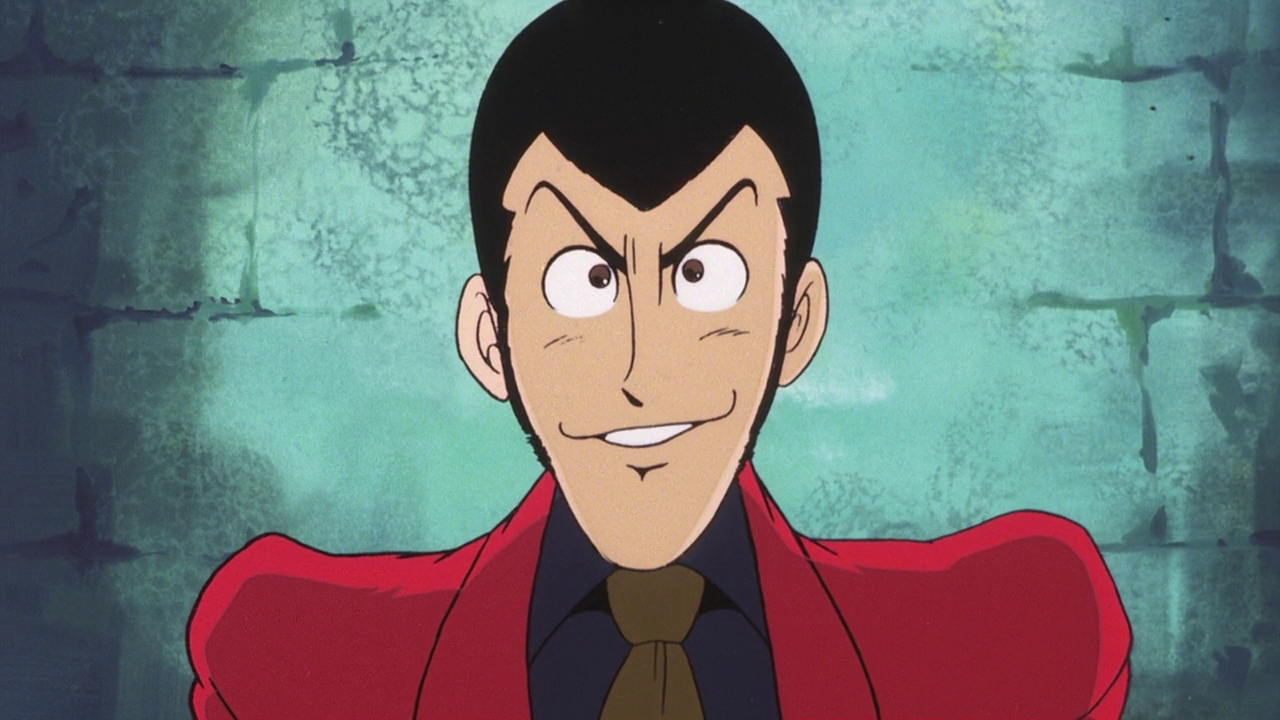
The Contemplation of Cagliostro
With Discotek Media’s incredible output of Lupin the Third releases over the last decade and a half, we Lupintic folk have been spoilt to the degree we would once have never believed. Remember when a couple of DVDs from the early TV special days was the best you could hope for?
The caveat now that Discotek’s localisations span almost all works in the franchise, is that new Lupin releases will be few and far between - though our collections are far better enriched as a result.
So naturally, when Discotek got us piqued by their tease of a Lupin release a couple of months ago, anticipation was high. For some of us, expectations were grounded in about as much reality as some of the late 2000s TV specials, and the rumour mill kept grinding release ideas crazier than the last.
Even though I kept my hopes modest, when the big Lupin announcement was revealed to be yet another home video release of 1979s The Castle of Cagliostro, I couldn’t help but feel a wave of frustration – at least to begin with…
“Cagliostro? Cagliostro?! Yet again, Cagliostro?” I wanted to cry, “Why Cagliostro?!”
However, being the big Lupin fan that I am, I turned to the positives of Discotek’s new release quickly: a brand-new English dub from the Epcar Entertainment crew, a beautiful steel book presentation, and a flurry of extras not included on the previous DVD releases.
In this mindset, my thinking had changed, particularly regarding the last question. This time, I exclaimed: “Why, Cagliostro!”
With its different approach to the Lupin gang, its more blatant good versus evil storyline and lighter tone, Cagliostro couldn’t be more different from the original creation conceived by Monkey Punch back in 1967, let alone 1978s The Mystery of Mamo, the film that preceded it. How come this adventure in the annals of the master thief manage to eclipse all others and assert the greatest influence?
One can immediately point out obvious aspects: Hayao Miyazaki’s direction and writing, the accessibility of the film to a more mainstream audience by simplifying the motivations of Lupin and pals. Plus, the fact that The Castle of Cagliostro is just rollicking good fun. As the franchise has gone on, Cagliostro’s shadow looms large, with plenty of references to be found in TV episodes, specials, OVAs, and Lupin the Third: The First essentially being a homage / loose remake.
I’ve said on several occasions that I find Cagliostro to be a great film, but not a great Lupin film, opting more for the aforementioned Mystery of Mamo. However, with many later projects taking more influence from Cagliostro, the changes in some of the characters doesn’t feel as egregious as it once did. Having better access to Lupin media through Discotek’s releases has helped better inform Western viewers as to Lupin’s evolution and bowdlerization. In many respects, Lupin’s softening in character in Cagliostro completes what Hayao Miyazaki and Isao Takahata began in their early Part 1 episodes in 1971 - 72, when the concept of anime aimed solely at adults was something TV executives and audiences weren’t quite ready for.
What I feel draws me, personally, back to The Castle of Cagliostro time and time again, is entwined within memory and reflection. My memory of the earlier days of my Lupin fandom, and how the theme of contemplation of the past in the movie is what I believe to be the driving force of Lupin’s character change for this caper. One reverberates with the other and creates a far richer viewing experience.
One metatextual link to the Lupintic past has already been established in the last paragraph: Hayao Miyzaki’s return to the Lupin the Third franchise after his work with Takahata co-directing Part 1. Another has already been alluded to even earlier in this piece and will be revealed at the end. I hope you were paying attention!
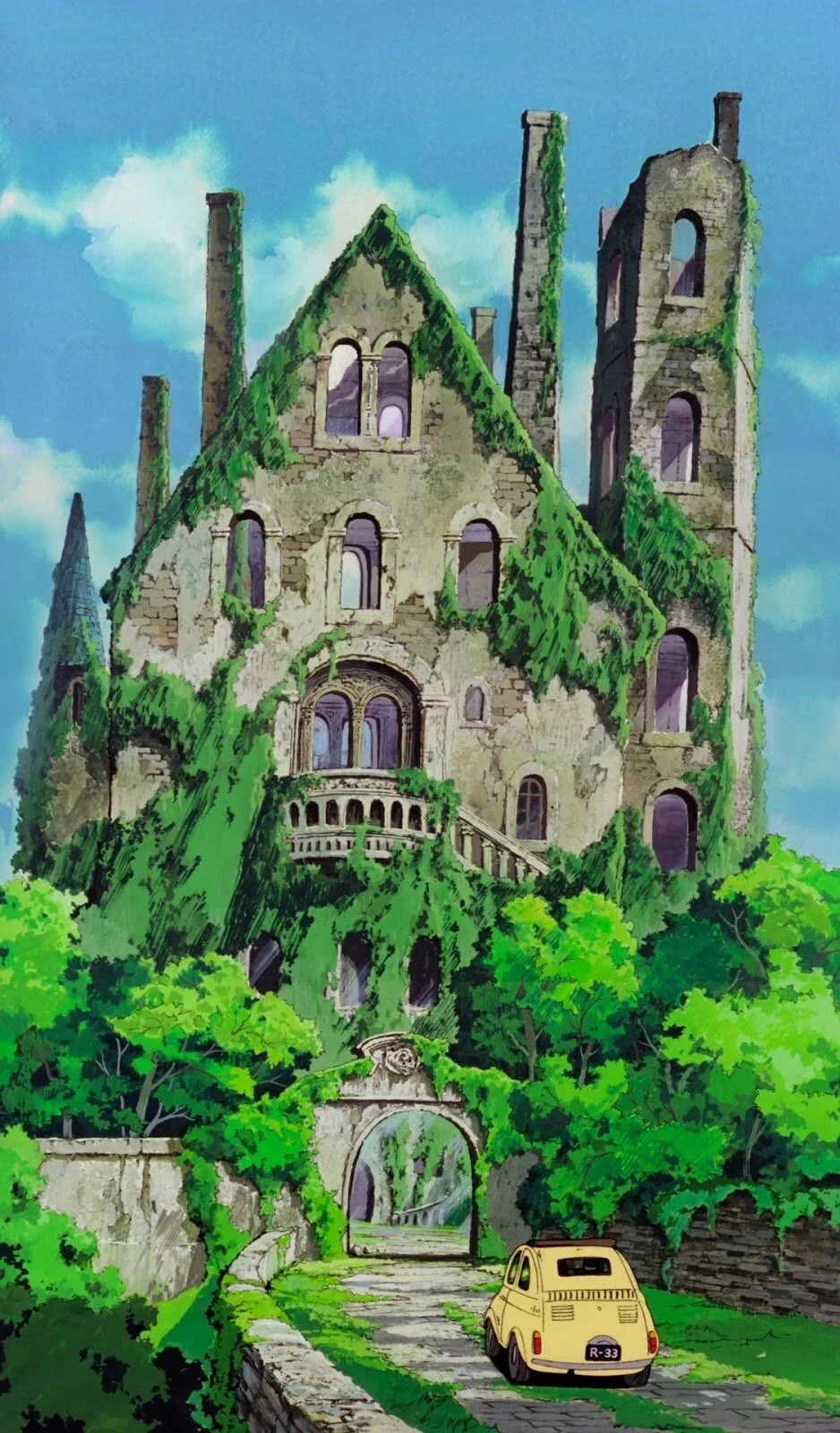
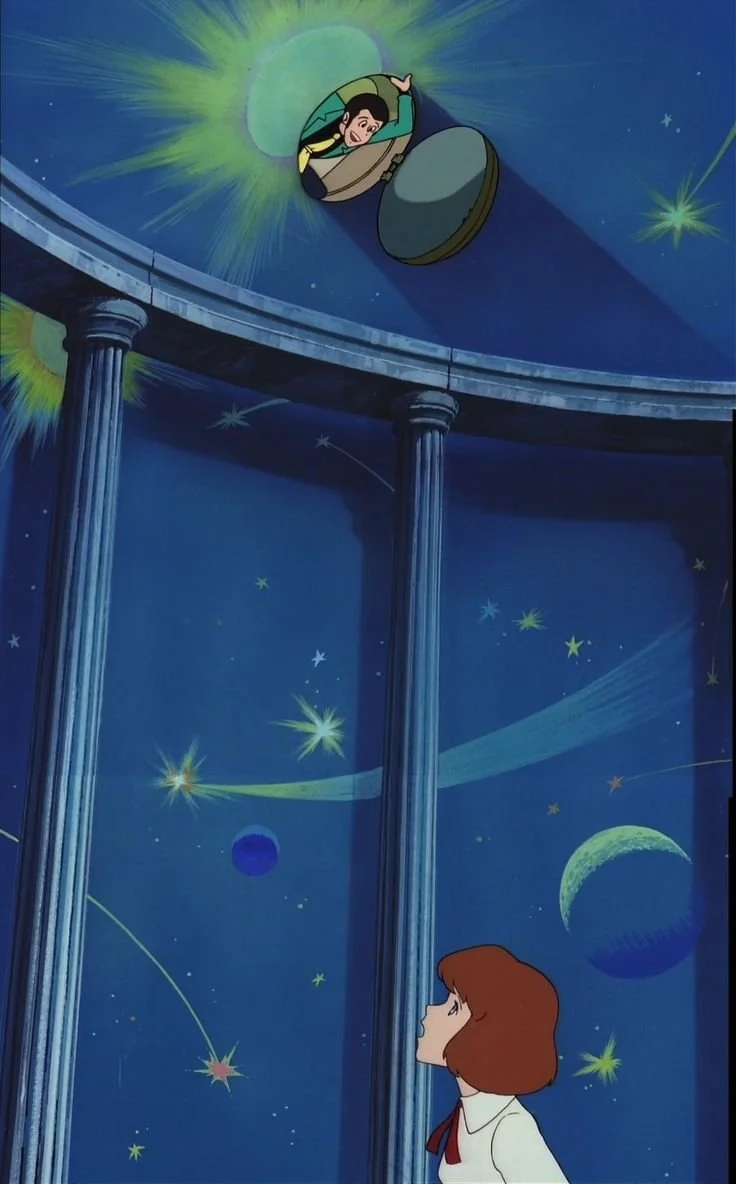
Regarding links to the past within the film itself, the first act has a few scenes that capture these important moments.
The film opens with Lupin and Jigen escaping a Monte Carlo Casino with their bags of cash, gleefully leaving their pursuers behind in the iconic Fiat 500 as the other vehicles suffer a case of Zantetsuken-itis. Barely minutes into the film, Lupin goes from his happy self to something more resigned as he realises the proceeds of their efforts are counterfeit. His recognition of the legendary Gothic Bills draws him back a decade into his past, his first reminder of the failure he suffered, and he decides to finally confront at long last. The old wounds are reopened - the ones that time could not heal.
Once the journey to Cagliostro is complete, Lupin and Jigen thrust themselves into the action when a woman in a wedding dress, Clarisse, is pursed by sinister assailants. Ever the white knight when a woman is concerned (in animation, at least), Lupin rescues Clarisse. Yet, Lupin has another transformation once she leaves her ring with the Cagliostro seal in his possession, leading to yet another period of contemplation for Lupin at the charred remnants of Clarisse’s family castle. This causes Jigen to notice, like we in the audience do, that Lupin is acting oddly. As he reveals later on, he no longer is just remembering his wounded pride after failing to crack the mystery of the Cagliostro counterfeiting complex, but also the debt he owes Clarisse when she saved him from ending up like those many, many corpses buried deep under the eponymous castle.
In these moments, Lupin’s recognition of the Gothic Bill forgeries and his wandering around the ruins, are probably the moments in which one can relate to Lupin the most in a lot of the franchise. How many of us can say that we have no regrets? That we wouldn’t do things differently this time around. While some of us will get those opportunities and some of us won’t, we all get to live in Lupin’s moment of self-redemption.
He not only wins out over the machinations of the Castle that defeated him a decade prior but also pays back a debt he owed to Clarisse which while he may have forgotten consciously overtime, his subconscious refused to let go.
While Lupin’s character change is usually simplified as him being “older and wiser”, it leaves out a lot of depth of which Lupin chooses to conduct himself differently in Cagliostro by his own choice. He utilises his experience of the last ten years to triumph where his youthful recklessness of the past failed him, and he has become more calculated in his approach to infiltrating the castle than the last attempt; announcing his presence to the Count so that Inspector Zenigata’s arrival would give him a fitting disguise.
In fact, the importance of reflection is made evident simply by watching the film itself. Remembering Lupin’s reactions to the bills, to the ring, his reminiscent wandering around the ruins, all foreshadows his reveals towards Clarisse’s part in saving him in the past. With many viewers these days unable to go long into activities without some secondary distraction (such as a mobile / cell phone), paying attention to something going just mere minutes ago in a film, let alone what’s going on in your own life, is getting harder to do as generations go by.
The past doesn’t just come into play for Lupin personally, it also plays a role in the plot as well on two fronts. The first being the effectiveness of the Cagliostro counterfeiting operation being highlighted by having it stretch back over four centuries, before the events we are seeing played out. In the Lupin version of history (always the best take on conspiracy theories), the Gothic Bills brought down the Bourbon Dynasty by financing Napoleon, it triggered the Great Depression of the 1930s and, based on the UN meeting later in the film, was playing its part on both sides of the Cold War.
The second comes at the denouement, once the evil Count is dead, Clarisse is safe and Lupin has uncovered the secret treasure of the Cagliostro’s: the ancient Roman ruins. In a movie that has Lupin confront his past and triumphs, what better way to symbolise the importance of the past and remembering it than by making the relics of it the illustrious treasure that was frequently being hinted at? Of course, we know Lupin would prefer the infinitely easier to transport counterfeiting plates… wait, scratch that, Fujiko’s counterfeiting plates.
If all this contemplation slipped past you, Yuji Ohno and Jun Hashimoto have your back with the theme song, “Fire Treasure”, sung by Bobby, which is the most melancholic piece of music not just in Lupin the Third media, but perhaps all media. With the increased sense of nostalgia, we in the 21st Century can feel the opening sequence of Lupin and Jigen travelling evoking our own unique memories of journeying through the Lupin the Third franchise. Not to mention the passage of over fifty years of Lupin compared to the original twelve years when Cagliostro was first released (yes, it really has been that long – crazy, right)? Considering that Miyazaki made Cagliostro to be his “ending” for the Lupin gang, his “Whatever Happened to the Man of Tomorrow?” if you will, the richness of melancholy that permeates the music is ever fitting.
For a lot of Western fans, The Castle of Cagliostro was their first exposure to the world of Lupin, which indelibly leaves a mark. Even though my first Lupin experiences were through Part 1 (somewhat piratically), the only physical media releases available to me in Australia were The Secret of Mamo and The Castle of Cagliostro on DVD. Many rewatches of these two films were the best I had in my first years as a fan of this franchise, until I could start importing Discotek releases to make up the short fall.
So, with yet another release of The Castle of Cagliostro, it almost feels like things have come full circle. One of my earliest experiences, one of many fans’ earliest experiences, has come back to the fore once more. But while it was originally one of a limited handful of DVDs through which you could experience the magic of Lupin the Third, this time it is one of a much larger library we can access.
To go even further, I didn’t have anyone or anywhere to share my love of Lupin during my first years of fandom. Now I’m listening to a podcast made by other fans who love the franchise as much as I do (Sideburns & Cigarettes: A Lupin the Third Podcast, check them out!); I’m part of Discord Servers where I can share my thoughts and feelings on the franchise, as well as share a few cool collectibles, and regularly visit this very website where I get my Lupin news and the opportunity to write this very piece.
Watching The Castle of Cagliostro now, I think back to the days where none of this was around and my gratitude that they exist increases tenfold.
Finally, to answer that question of an earlier metatextual link to the past I posed earlier, with the Epcar Crew back to voice the Lupin gang once more, The Castle of Cagliostro has defined its connection to those early Adult Swim days circa 2003, another starting point for some Western fans of the franchise.
I wonder how many more there can be?
A huge thanks to our buddy, Seb, for putting together this fantastic article.
If you would like to follow Seb on social media and hear more of his musings, you can catch him on Instagram, Bluesky, and X (Twitter). If you are interested in picking up the new Blu-ray release of Cagliostro, you can snag that via the Crunchyroll store here.