Why you should play: The Drifter
Games in the Point and Click Adventure genre are typically not my bag. Playing these in the past, I have often become frustrated at the convoluted puzzle design, and found myself endlessly wandering around maps, trying to work out what the game expects me to do next. Out of the few titles I have played, the only two I have stuck with long enough to finish are the classic LucasArts Secret of Monkey Island games, with me finishing the first two in the series once they had their Steam re-releases in the late 2000s.
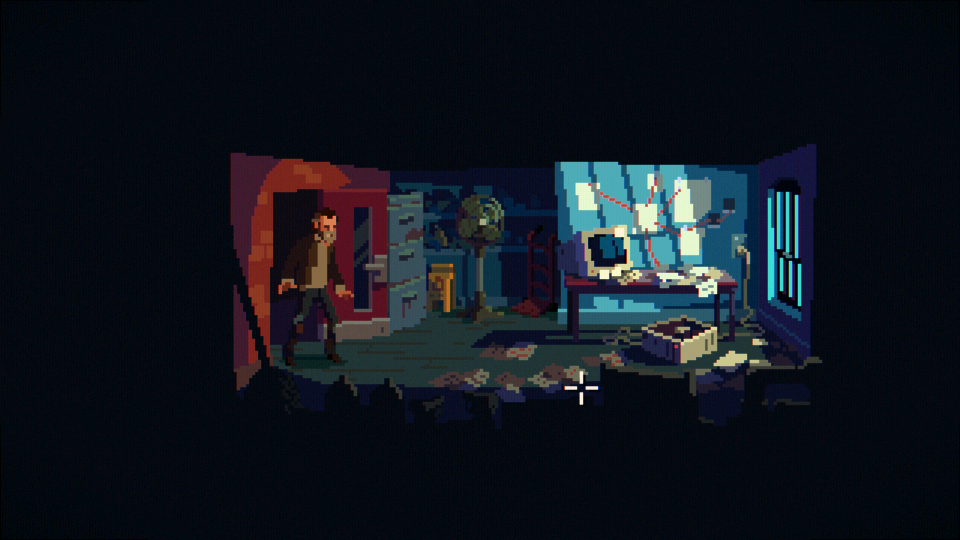
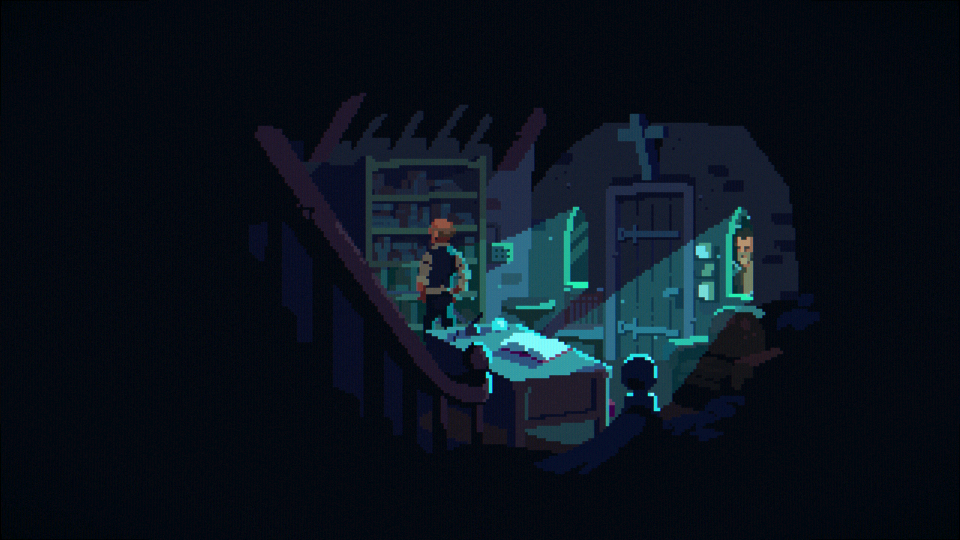
What was it about The Drifter, then, that stood enough to make me want to push past my usual Point and Click fears, and give it a go? Easy. The style. The visuals. The music. I watched one trailer, and my interest shot up. The dark, gritty setting coupled with the chunky pixel graphics - which perfectly emulate that of early 1990s LucasArts games, such as the aforementioned Monkey Island series, set it apart from everything else I have seen. The voice acting also struck a chord - with it being developed in Australia and using voice talent from that same area. There was a level of quality here that helped it stand out from amongst everything else in the bustling Nintendo Switch digital storefront. With a price of around £15, or thereabouts, I had to give it a shot, and I’m so glad I did.
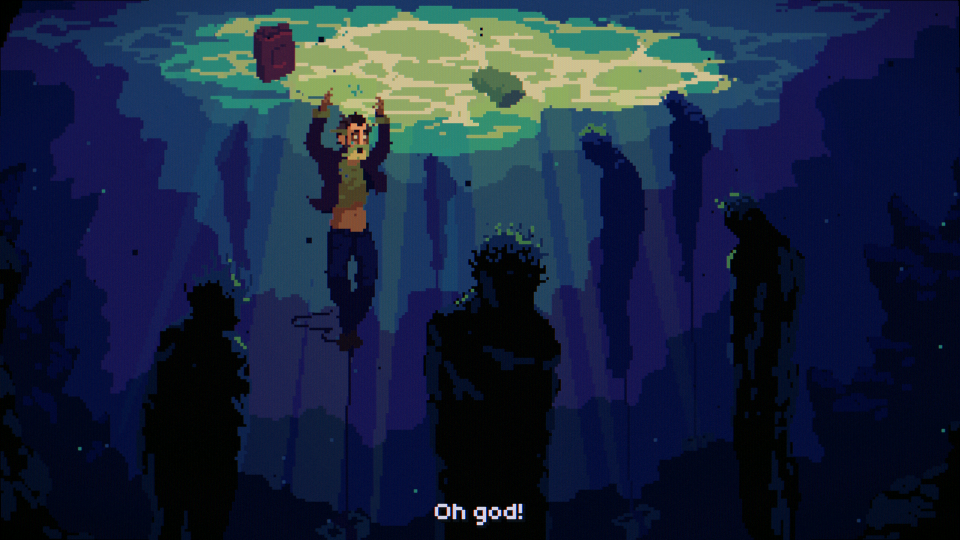
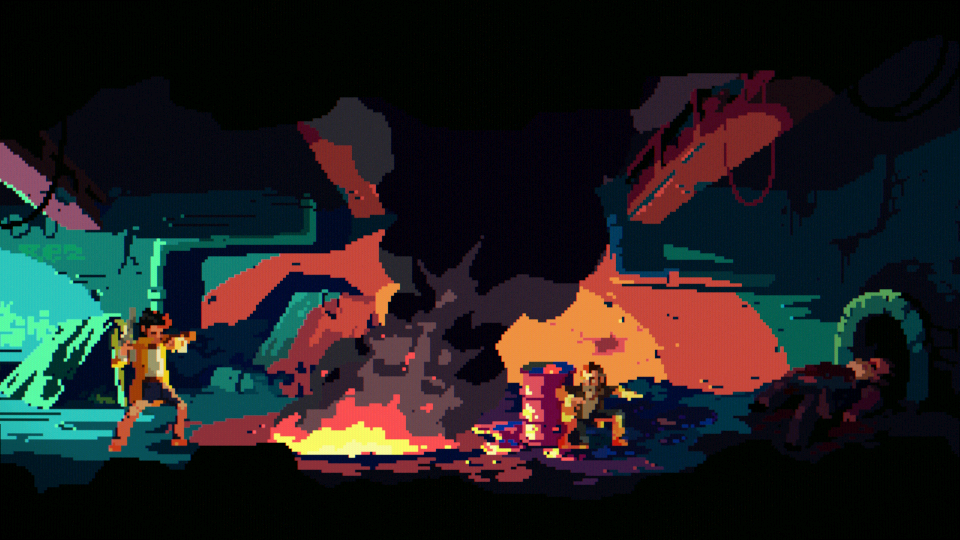
Playing a Point and Click Adventure title on console is often a risky business. Traditionally, these games are often developed for PC first because of - well - the nature of pointing and clicking. Using a mouse for this is a no-brainer. Thankfully, developer Powerhoof understand where games of this nature have failed in the past and developed a rather clever control “ring” interface, that allows players wielding a pad to interact with the environment with ease. On the Nintendo Switch, movement is tied to the left stick, while the ZL button opens the interaction ring, and ZR allows you to select a point of interest. The right stick can be used to choose a focus object, with new ones coming into view the closer you get to them, done with the left stick. It is genius. Big fans of the genre may scoff at it - as changing how you interface with such a nostalgic type of game could mean it is difficult to convince people to give it a shot. However, for a primarily console gamer, and one that has only dabbled into shallow waters when it comes to Pointing and Clicking, for me, this was ideal.
Being able to navigate around the world of The Drifter with ease was important, as I found it intriguing. Without spoiling anything - because you absolutely should give this a go and learn about the story for yourself - it starts out with you taking the role of Mick Carter, a member of the homeless community returning to his hometown to attend his late mother’s burial. Upon arrival, Mick is confronted by strangers with rifles, and is shot at, immediately going on the run. There is a lot to love here - despite being set in the late 1990s or early 2000s, the theme of the world feels very sci-fi, even Bladerunner-esq, however, the story unfolds in a way that had me on the edge of my seat all the way until the final moments. Some of the themes are sensitive, involving loss, grief, and regret. All are handled well and acted in a way that felt appropriate. There are heavy sci-fi themes, with plot elements I would rather not get into here, as going in not knowing felt important for my own personal journey with it. All I can say is - in my opinion - the writing here felt a step above many, if not all the games I have played over the past few years. The use of narration in particular, with Mick’s dulcet Australian tones voicing each line, painted a perfect picture without the need of flashy graphics. It felt almost book-like, and for the genre, I feel this works particularly well.
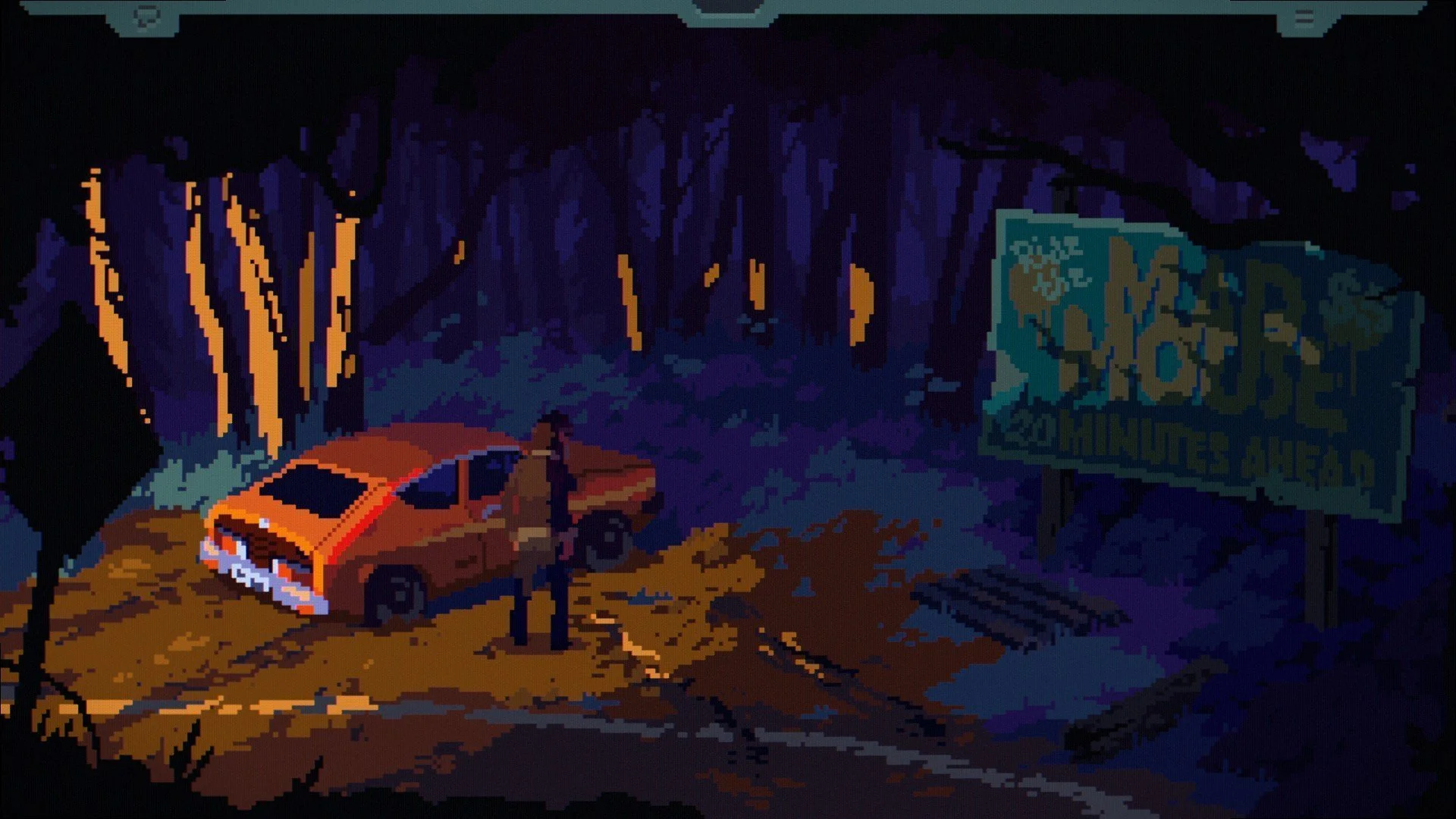
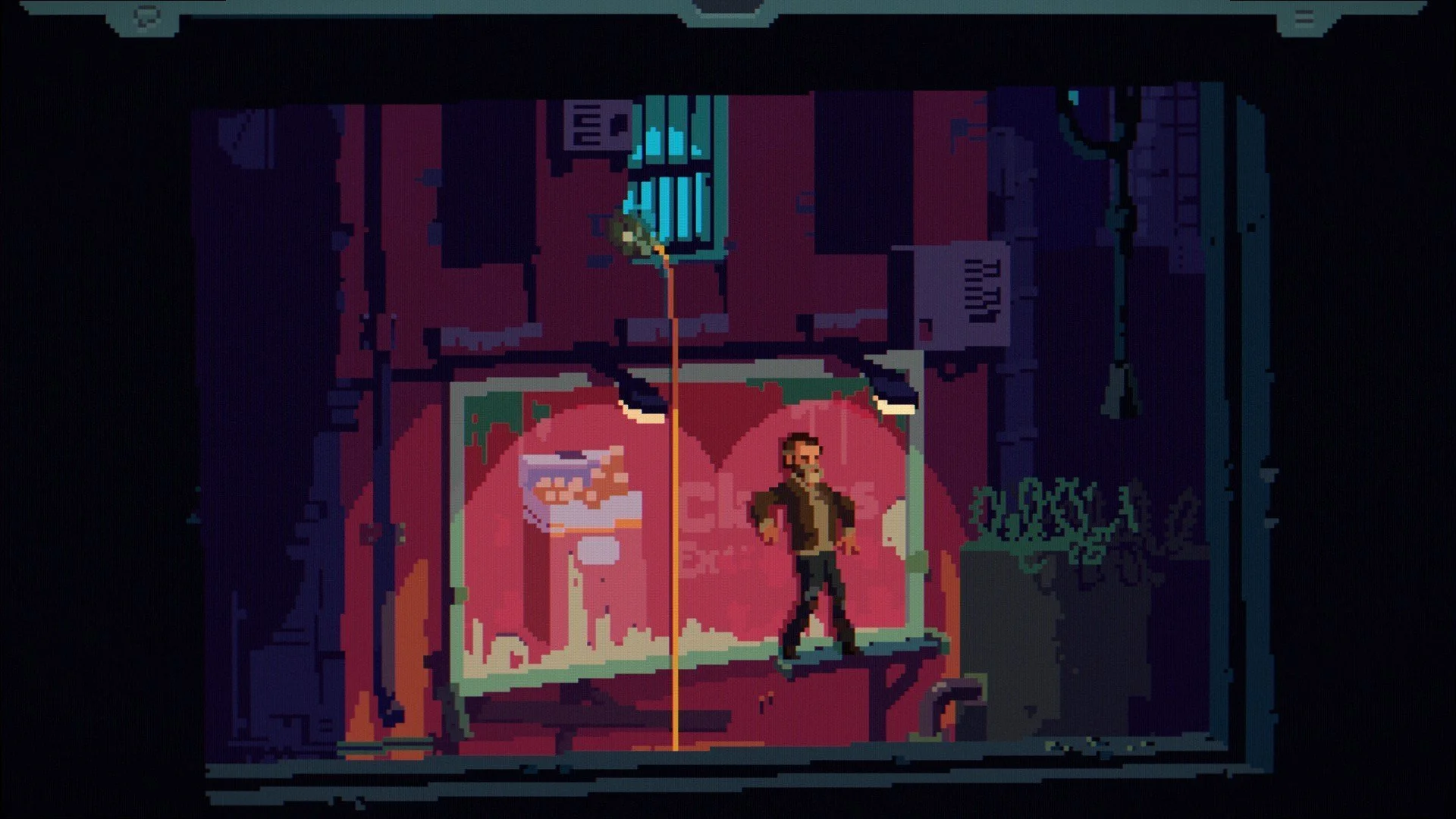
With this in mind, though, the visuals certainly do not pull any punches. These are some of the nicest pixel graphics I have ever seen, and there are a lot of detail in the characters and backgrounds. The way Mick stares in disbelief at the horrors he is presented with on his visit back home, the explosions as things kick into high gear - there is so much quality in the art here, and I still cannot get enough of it, even after completing it. With that said, the small team behind this game have made the most of their budget. In heated moments where there are a lot of things going on, or in an attempt to add detail that the graphics simply cannot convey, the narration does the heavy lifting. Again, this is uplifted by the superb writing and voice talent and only added to the experience in a positive way.
Unlike other games in the genre, The Drifter never felt overwhelming, mostly due to its segmented chapter structure. Each chapter contains only a few screens of play, and there is no real “open world” style map exploration as in the older LucasArts titles. Its world is smaller, and tight knit, feeling better off for it. This worked well for me, as it meant less time spent getting lost. Admittedly, a couple of the puzzles in the game did stump me. The soft hint system is helpful, with characters gently guiding you towards solutions after multiple attempts. Maybe a more explicit “hard” hint system, where you can opt for an answer, would have been helpful. The two I did end up looking up involved me missing an item on the floor, and failing to grasp a combination of items needed for a solution to a puzzle. Still, nothing too outlandish, and certainly no rubber chickens with pulleys in the middle.
I am concerned The Drifter goes under the radar. While it came out on PC a year ago, and won plenty of awards, the Nintendo Switch versions are now available, and I want to see this team do well. If you are a Lupin fan and have an interest in darker thriller stories with a sci-fi edge, I think there is a strong chance, like me, you will become infatuated with this. One character in particular, Detective Hara, was my personal favourite. I think fans of Cowboy Bebop or a certain ICPO inspector will latch onto Hara, and appreciate him as I did. I would love to see more from this cast in general, and I feel that having side characters that are just as well written and likable as the main protagonists is a great sign for a narrative driven experience such as this one.
Do me a favour and check this one out. You won’t regret it!
The Drifter is available digitally across PC, Mac, Linux, Nintendo Switch 2, and the Nintendo Switch. This review was based on the Nintendo Switch 2 version.