
Review: Denshattack!
Undercoders, the developers of the game subject to this review, must have the same SEGA obsessed brain I do. There is a vibe to their latest title - Denshattack! - that feels distinctly early 2000s, specifically the SEGA Dreamcast era, and it is a period of time I’m still hung up on in 2026. The bold visual styles and the bouncing soundtrack remind me of the likes of Jet Set Radio and Sonic Adventure, while the storyline has the feel of early 2000s anime to it. When the reveal trailer popped up during Gamescom’s Opening Night Live event last year, something fired off inside my head that told me - I need this, this game is for me. Boy howdy, was it ever.
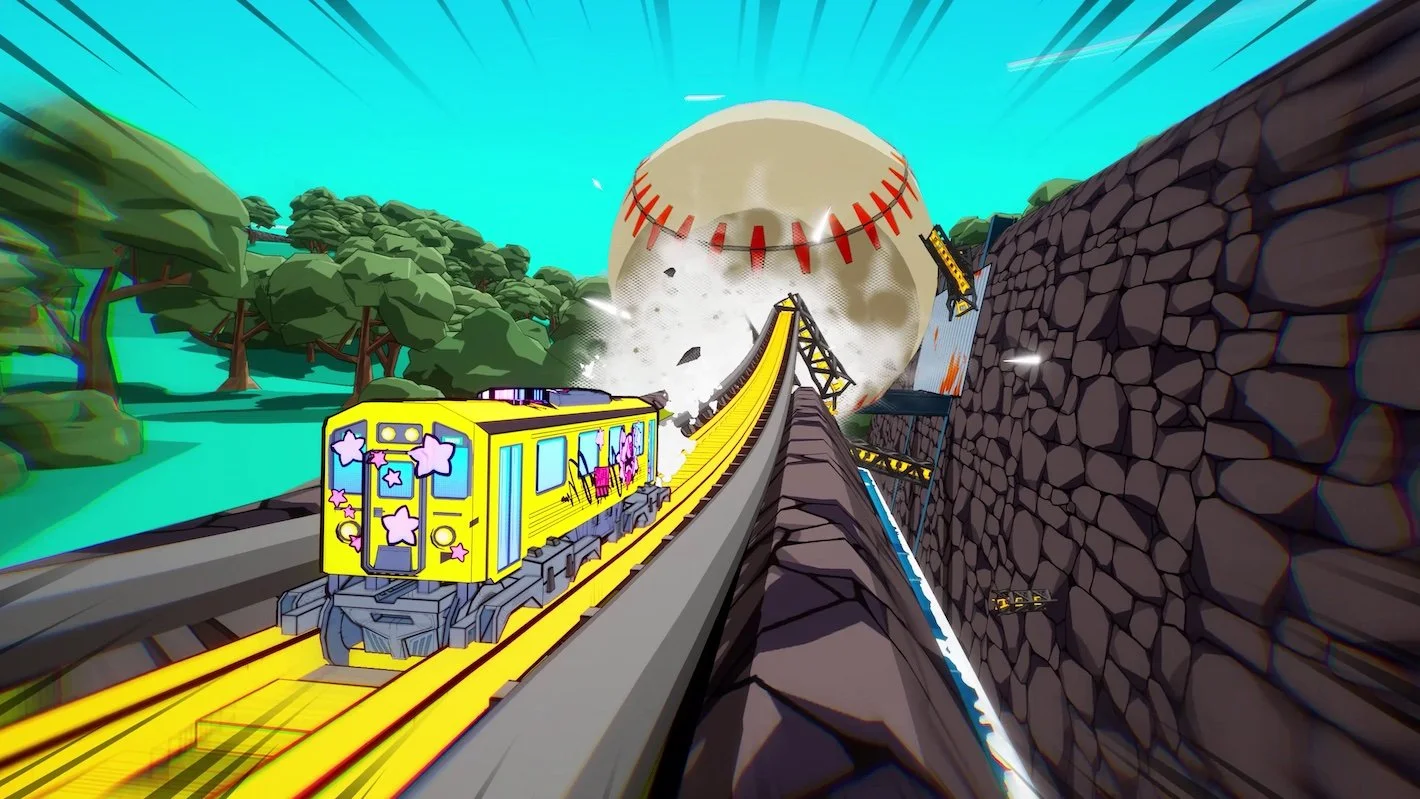
During the fifteen or so hours I spent speeding across Denshattack’s semi-post-apocalyptic Japan, I could not help being in awe at the excess of it all. The core idea - you are a small, Japanese commuter train, performing Tony Hawk style stunts across sixty or so different “courses” - has been explored to the nth degree. It starts off simple, with you hopping between tracks, grinding across rails, and jumping into the air to pull off wild tricks, but it goes places I wouldn’t have expected from the first hour or so of play.
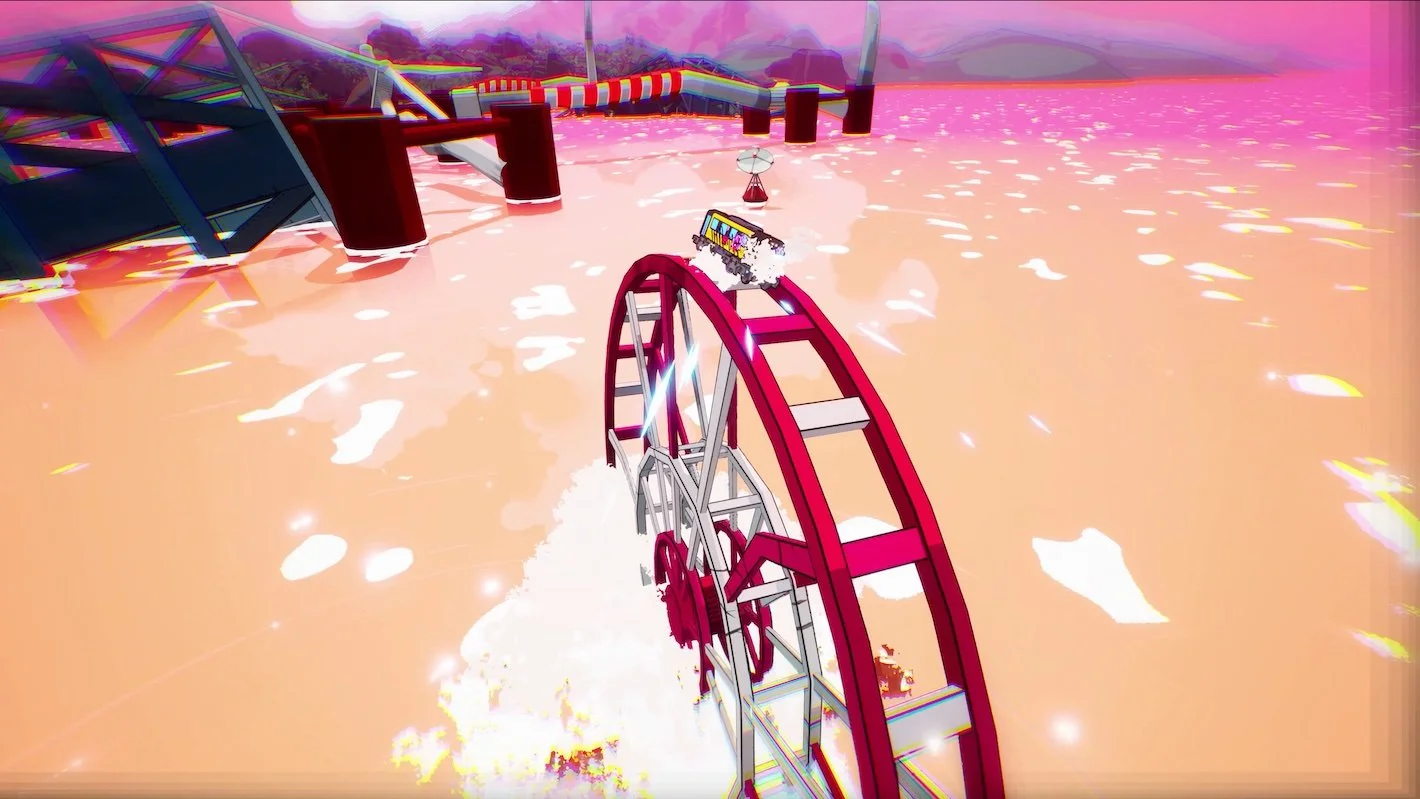
New mechanics are introduced consistently, with each of the nine total prefectures - from Nagasaki to Hokkaido - providing players with at least one new mechanic. It kept me interested, and it spoke to the level of confidence the developers must have had in the core idea to build upon it so greatly. Take for example the zipline - around half-way through the game, you gain the ability to hook onto a monorail, suspending your engine above the environment. You can swing left and right on the line, and perform tricks as you do so. This helps you build up your score - but you can also drop down or fling off of it at any moment, dropping onto different rails and tracks for greater scores. This then ties in with a different mechanic gained in the late game - the ability to magnetise towards rails - allowing you to pull of some truly wild manoeuvres. Despite being “on rails”, the amount of freedom you feel, and the manner in which the intricate courses are designed, is impressive.
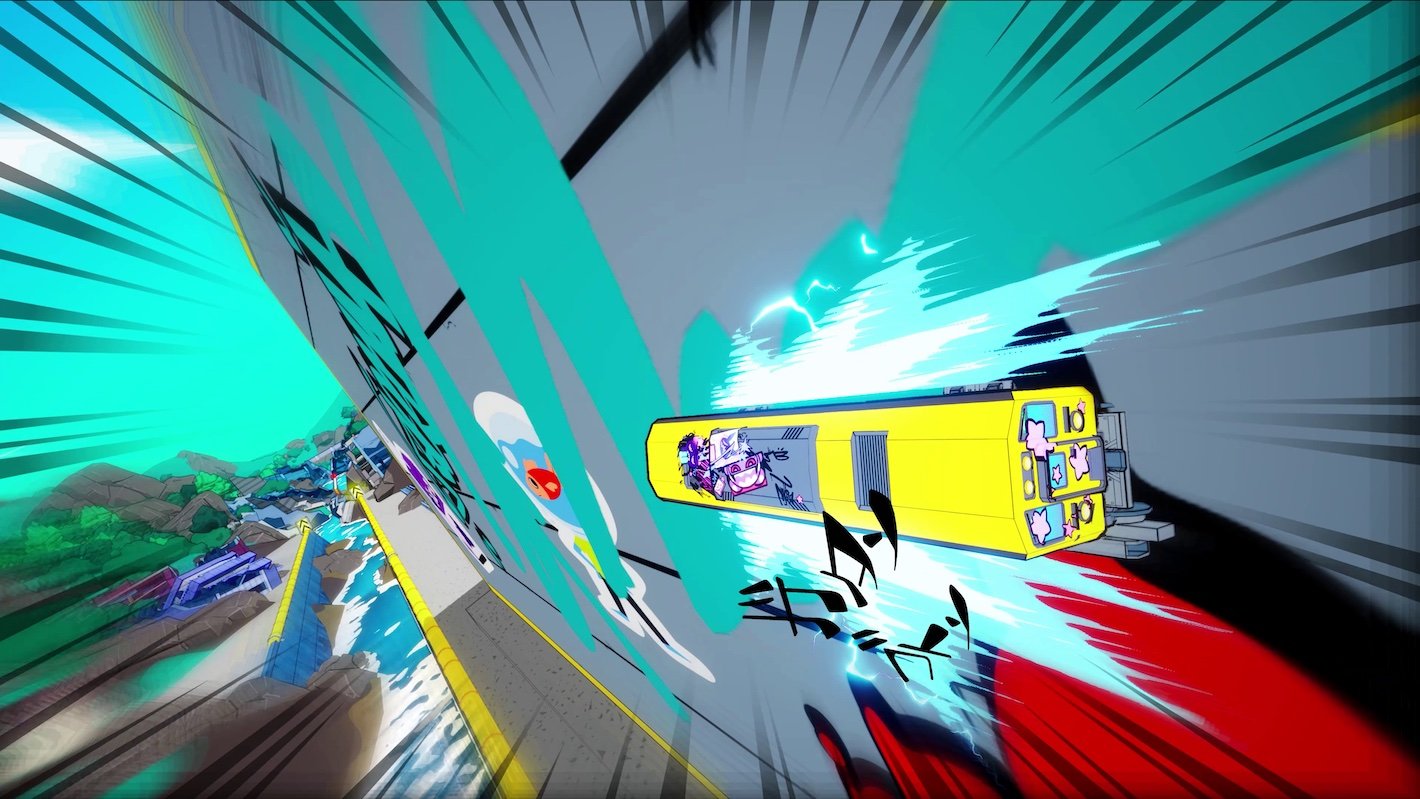
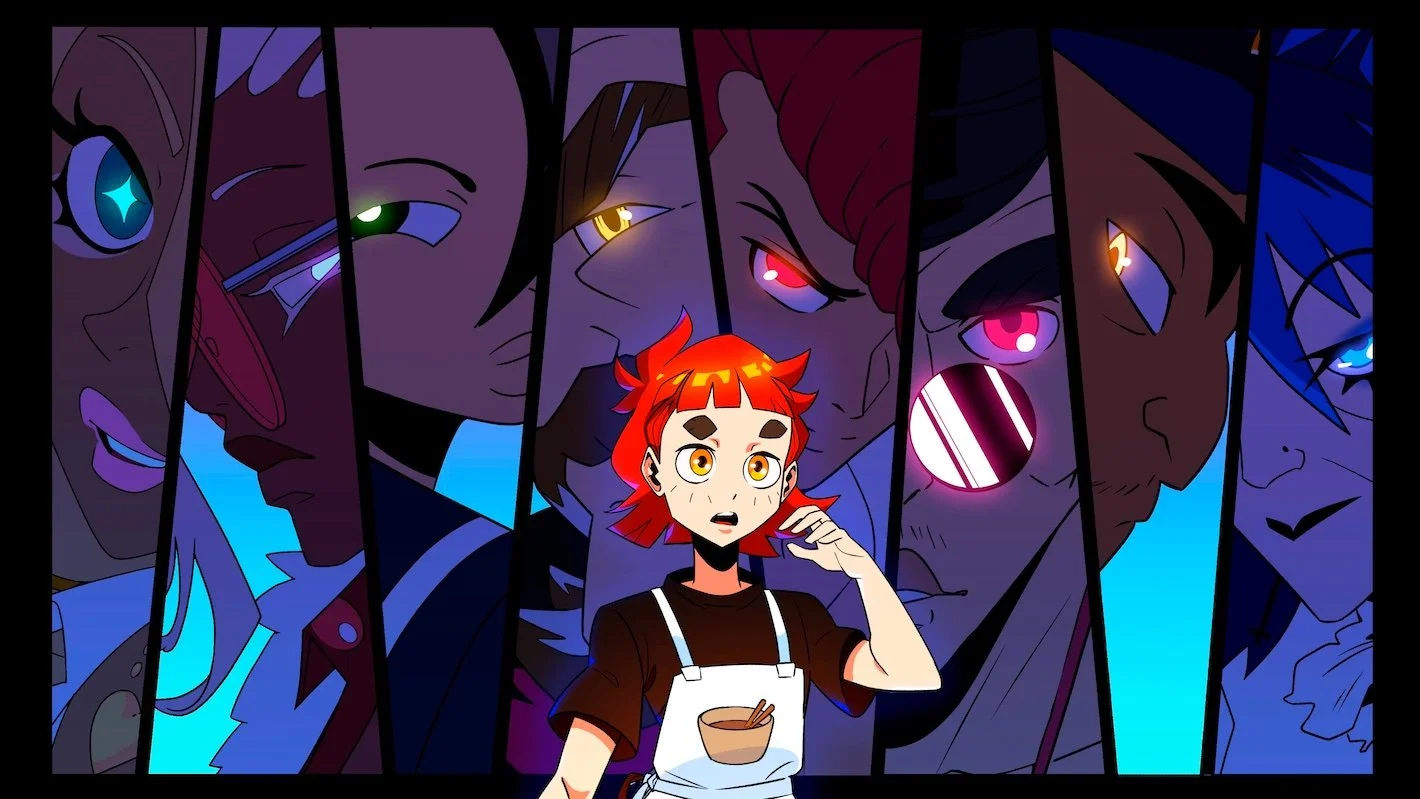
To this comes a negative in that the controls can feel overwhelming. Despite its initial linearity, there is a lot going on in the world of Denshattack!, and to truly master it takes lightning-fast reflexes, deep knowledge of its control scheme, and a little luck. While the face buttons mostly take a back seat, the triggers and sticks are consistently mashed to help build up score and work your way to the end goal without crashing. If playing in English, “You’re doing great, sweetie!” is a voice line you may hear a lot, as one of the female leads, Yoshie Mitsutake (voiced in English by Dev Joshi, and in Japanese by Hana Takeda), gives you the encouragement you need to get back on track after a crash. It takes some getting used to - but like many trick based, score attack games, it feels great when you are able to pull it off. Getting a clean run and being awarded a gold medal come the results screen gave me a rush of adrenaline, and I found myself replaying earlier stages with knowledge learned from the late game to do just that. There are a few bugs - and that is where the aforementioned luck comes in.
I did at times find myself crashing through the environment when I wasn’t supposed to, with the alignment of my little train and the tracks not always locking together. This was particularly noticeable with the double track drift mechanic - during which your train spins sideways and crosses multiple tracks at once. On more than one occasion, I felt myself pulling this off with ample time to hit the drift gate before me, only to be rewarded with a collision. A minor annoyance in normal play as the game gets you back into the action in a matter of seconds, but if you are striving for a perfect “no crash” run, this can be frustrating.
The story feels a little take-or-leave. It reminds me most of the Pokémon anime from the late 1990s, with the game’s protagonist, a young lady named Emi Araki, discovering her new passion for “Denshattack”. She ends up taking her grandmothers old train on an adventure after learning of the extreme sport, trawling across Japan in an attempt to take on the best. Rather than challenging and befriending gym leaders along the way like in Pokémon, Emi instead meets a bunch of unruly sorts, collecting local gang leaders and Yakuza bosses for her posse. There are short cinematics that play out introducing them, as well as static dialogue sections with some narrative. There is also a wider plot involving surveillance, government control of the media, and even A.I. I didn’t personally feel myself becoming too caught up in this, and honestly, the gameplay was enough for me. I was happy to see it through for that alone - discovering new mechanics, new stages, and new music.
Speaking of - the soundtrack is a beast. Music director Tee Lopes (Sonic Mania, TMNT: Shredders Revenge) brings the addictive, pop style sounds you would expect, whereas Andrew One (GI Joe: Wrath of Cobra), Toni Leys (Go Slimey Go!, Super Farming Boy), and Sean Bialo (Mighty Morphin Power Rangers: Rita's Rewind, Penny’s Big Breakaway, TMNT: Shredder's Revenge) round off the rest of the soundtrack with some interesting, fun styles of their own. There are then plenty of guest tracks, from the likes of Shoji Meguro (Persona series, Metaphor: ReFantazio), 2 Mello (Bomb Rush Cyberfunk, Celeste B-sides, Sackboy: A Big Adventure), Ryo Nagamatsu (Splatoon series, Mario Kart Series, The Legend of Zelda series), Kohta Takahashi (Ridge Racer, Ace Combat 2, Tekken 5) and many more, that add a lot to the more varied levels, such as the boss fights and races. The stand outs for me, however, are of course, Richard Jacques (Jet Set Radio series, Headhunter, 007 Blood Stone, Marvel’s Guardians of the Galaxy) and Takenobu Mitsuyoshi (Daytona USA, Virtua Fighter series, Sega Rally Championship), who have both been summoned from the depths of the SEGA well to contribute. Both of their songs are a treat for fans of SEGA racing titles of yore, and they fit right in with the style of Denshattack! I can imagine, by years end, this will remain one of my favourite gaming soundtracks of the year, along with Mina the Hollower and MIO: Memories In Orbit. A treat from start to finish.
The boss battles are where the game truly shines, with one per prefecture, closing out the section. These range from battling a giant mecha, to taking on members of the Yakuza represented by Japanese lantern style floats. They are a spectacle and always feel like the studio firing on all cylinders, almost even punching above their weight, just like Emi in her little train. My personal favourite was the finale to the seventh world, which includes a rhythm-based section visually representative of both Guitar Hero and Rock Band. I never would have considered its inclusion, but upon seeing it - of course, it is a no-brainer! The way the music notes scroll down the screen in those games is almost reminiscent of a train track - marrying the two together works well and delighted me at the time. Naturally, the music to this boss also slaps, making it a standout moment of the game in general.
Despite a few bugs and some head scratching caused by the control scheme, Denshattack! is a big game from a small studio, and one of my standouts from this year. Its core idea is fully realised and explored to great depths. I can see myself chugging along and replaying stages from this over the next few months in an attempt to mop up as many of those gold medals as possible. A gem of a game, and it runs great on Switch 2.
Denshattack! is available digitally across PC, Nintendo Switch 2, PlayStation 5, and Xbox Series S | X. This review was based on the Nintendo Switch 2 version.
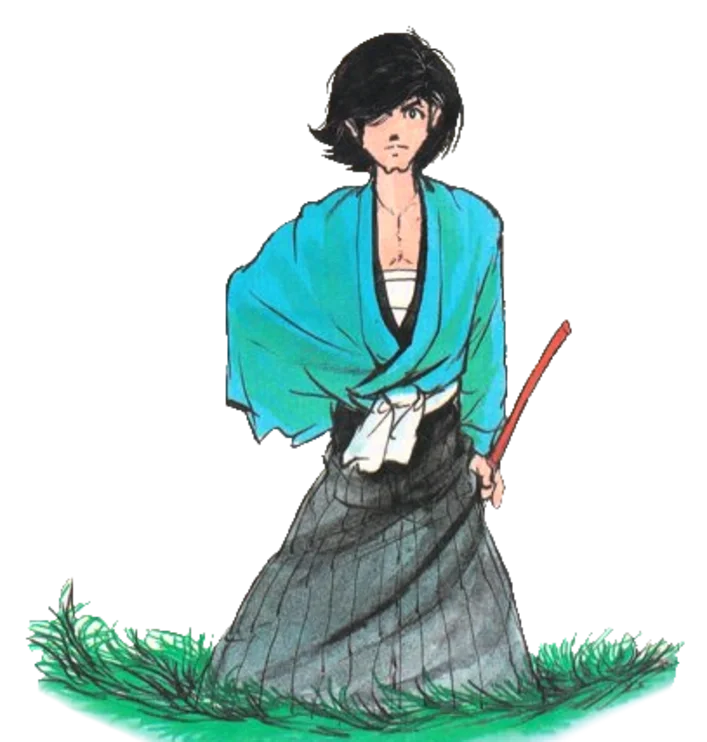
Goemon says: “The scenery in this game reminds me of home. The days spent training… just me, nature, and my trusty Zantetsuken. A train that can fly? We must not allow Lupin to hear of this absurdity, as it will poison his mind with bad ideas!”