
Review: Lupin III – La Merveille
Here we are, folks! After decades of legal issues, and tough negotiations with the copyright owners based in Japan, Lupin III has finally got his first fully released French-made adventure! Announced in late 2025, the “Kana Classics” album La Merveille, by Kid Toussaint & José Luis Munuera immediately piqued our curiosity. My Swiss stubbornness won against French inertia, and after months of exchanging mails with Kana, I was fortunate enough to interview the authors ahead of release, the result of which you can read by clicking here.
The publisher had sent me an incomplete version of the comic in preparation for the interview, so the story was known to me since late May 2026. Out of professional etiquette, I waited for the finished album to come out before sharing my thoughts on it. After reading both the comic and the collector’s edition supplementary material, my general feeling towards La Merveille is that it has the flaws of its qualities.
Let us start with the positives, as they are many things I enjoyed. The story is fast-paced and playful, and even in its quieter moments - such as the Tokyo sequence with inspector Zenigata - it manages to keep the viewer invested. More importantly, our main Lupin characters are the story’s focus. No extraneous ingénue waiting to be saved here!
Speaking of the characters, Toussaint and Munuera know Lupin through and through. Munuera’s blend of Franco-Belgian sensibilities and manga-like fluidity works perfectly for Lupin and Co. You can definitely feel shades of Yasuo Otsuka and Kitahara for the character designs, with the exception of Fujiko, who, by Munuera’s own admission, was tougher to get right. Rather than referencing any of her previous designs, the artist gave our favourite femme fatale a decidedly Disney-like quality akin to the works of Glen Keane. Fujiko remains easily recognizable thanks to her long auburn hair, and while she’s used sparingly (more on that later), she acts true to her duplicitous self.
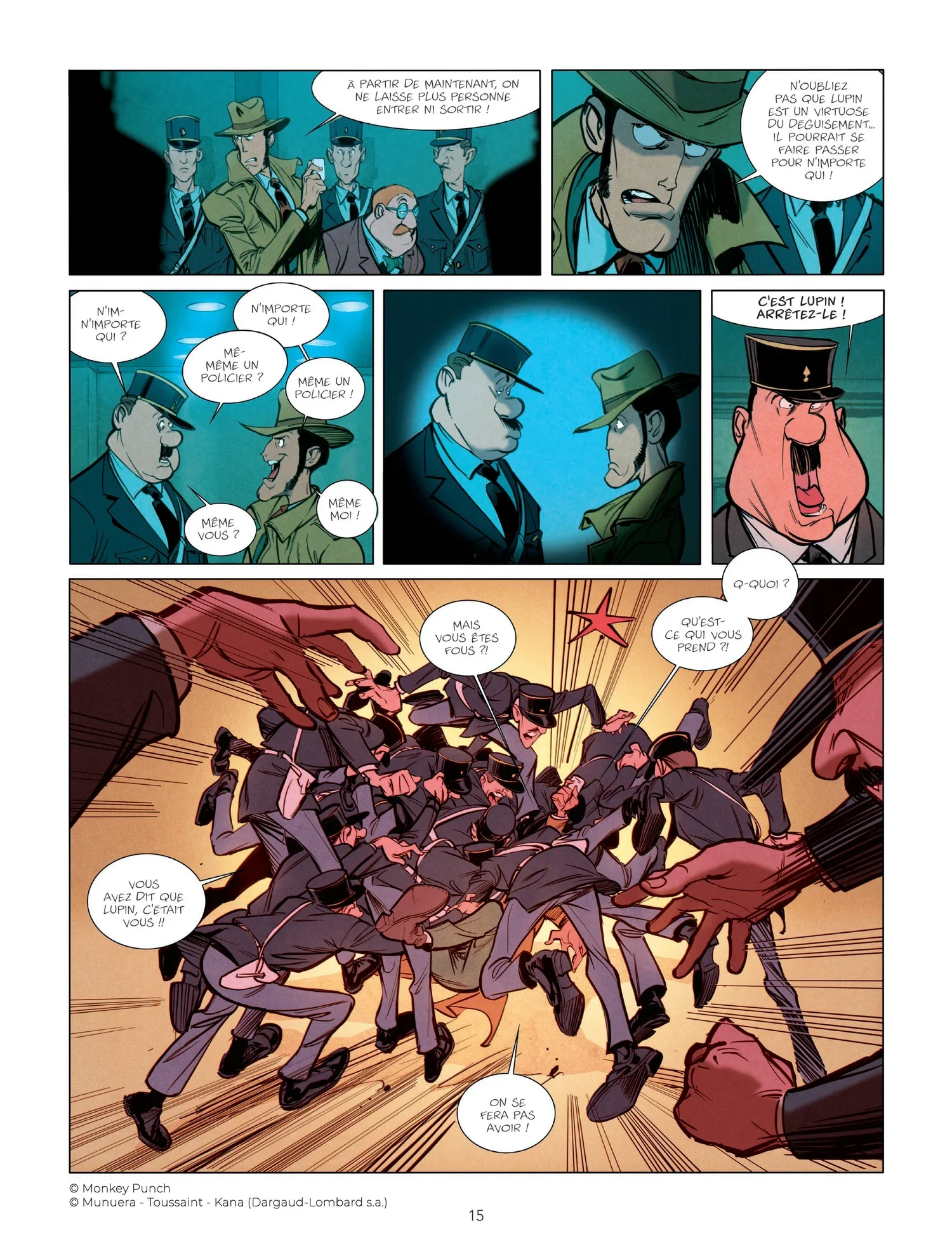
Eagle-eyed readers will also see references to several Franco-Belgian comics from throughout History. The English inspector chasing after Arsène Lupin in the prologue looks eerily similar to inspector Fixchusset from Tif & Tonton (by Will & Tillieux). A diminutive Spanish worker looks straight out of an Asterix album, while the police officer apprehending Zenigata is the spitting image of Agent 212 (by Daniel Coxx & Cauvain). The mute henchman Handjagger himself looks like Count Champignac from Spirou as turned into the Terminator!
Other characters are clearly based on Lupin’s extensive rogue’s gallery. The art collector Muscovic looks like the long-lost twin of Professor Lonebach from Part 2s 145th episode "Albatross: Wings of Death", whose “mechanic” character archetype also helped inspire the character design for Doctor Ivo Robotnik of Sonic The Hedgehog fame. The flamenco dancer Conchita bares a passing resemblance to the Carmen-like character from Part 2s 26th episode, too.
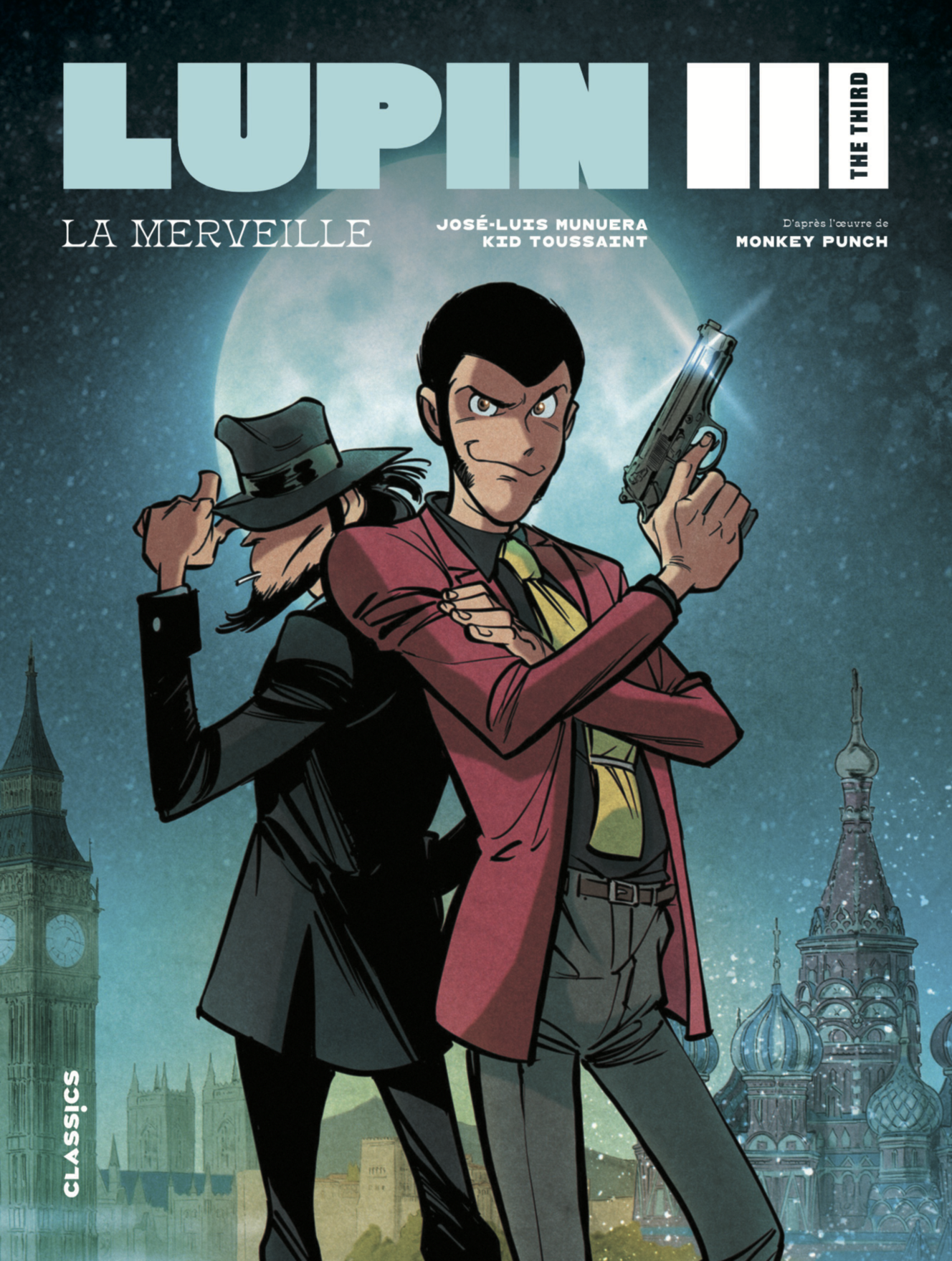
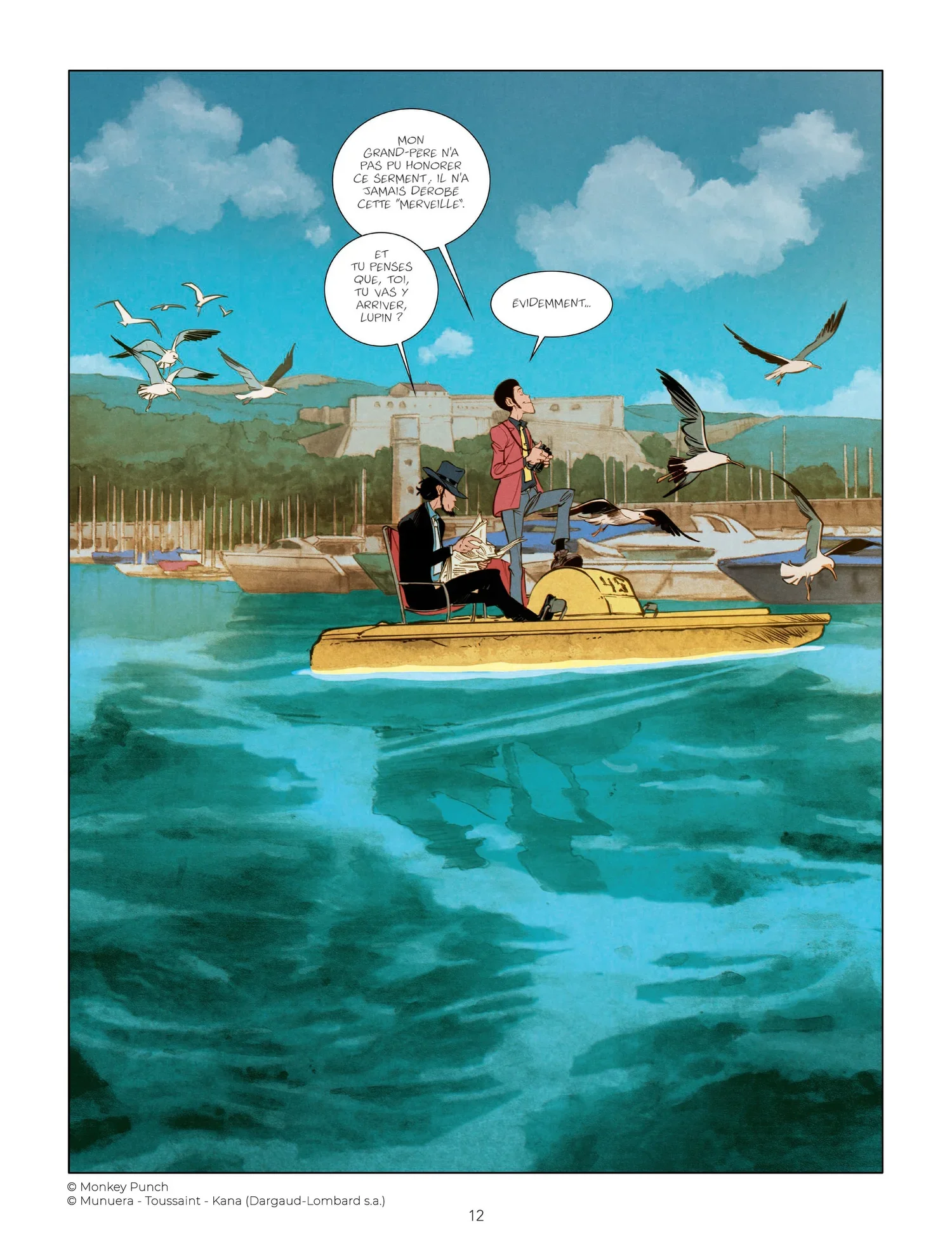
Writing-wise, Toussaint’s script is filled with witty repartee and fun quips, with just enough French references to not alienate foreign readers. The supplementary material states Toussaint watched and read almost every Lupin title he could find, and it shows. While Jigen and Goemon play second fiddle, their respective personalities are captured well. Toussaint clearly had a lot of fun writing for our bearded gunslinger, but even if he struggled a bit more with Goemon (like many writers before him), his take on the samurai allows for the kind of deadpan humour we sorely missed from our stoic swordsman. Conflict between the three thieves is kept to a minimum, but their banter is on par with the show. Inspector Zenigata gets the right balance of competence and bad luck, and the Tokyo sequence allows the reader to see things from his perspective for a change. Both writer and artist knew which era of Lupin’s storied history they wanted to pay homage to.
And therein lies my issues with the album. While it is essential to judge a work of fiction for what it is and not on what one wishes it could be, the album’s nostalgic approach can be limiting at times. Such effort has been made to replicate the tone and feel of Part 2, setting the events in the late 1970’s, that you start wondering if the authors had any appreciation for the more recent entries in the franchise. This issue is exemplified in the colouring treatment. While certain splash pages are beautiful to look at, and every atmosphere is well conveyed, the over-reliance on grainy textures and effects can work in detriment to the line art, instead of lifting it up. Some panels are almost too dark to appreciate fully.
If the idea was to reproduce a classic anime feel, as stated in the supplementary material, not only is it not accurate (the colour treatment in Parts 1 through 3 was much simpler than anything seen in the album), but it also clashes with the bande-dessinée format. This desire to reproduce animation through an immobile medium can also be felt in Munuera’s panelling. The necessity to keep things brisk and fast-paced sometimes forces panels to be too small or too big for what they mean to show. There again, we think the album should have taken the medium’s limitations in mind.
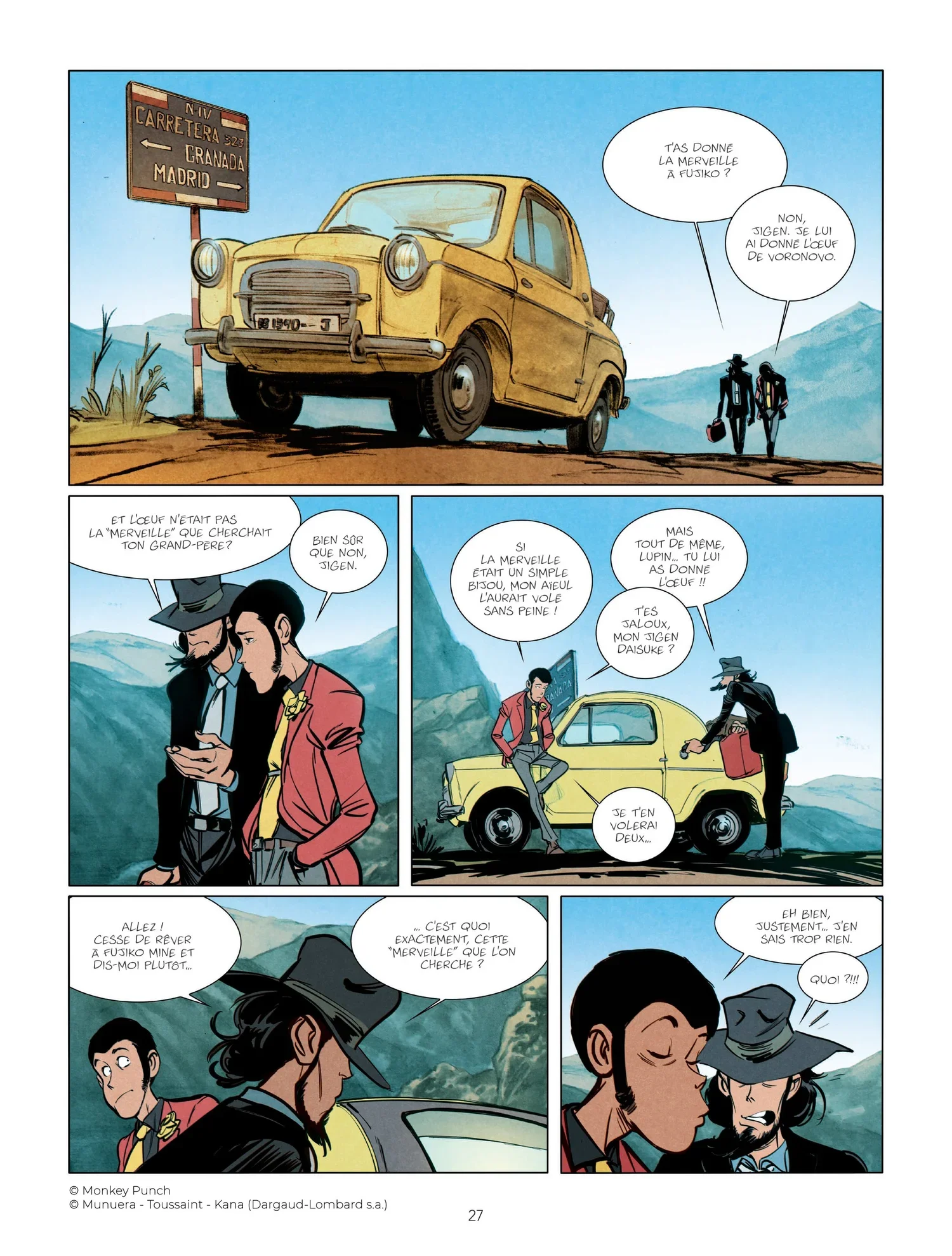
Plot-wise, the authors’ goal to capture a “classic” Lupin feel means that very few risks were taken. We have already seen Lupin trying to find a treasure his grandfather couldn’t (or wouldn’t) steal as recently as 2019 with the 3DCG animated film, Lupin the Third: The First. We’ve already seen Lupin in jail, trying to reach out to an inmate for information in 1995s theatrical feature, Die, Nostradamus. We’ve already seen Fujiko pretend to leave Lupin for good only to come back for the climax. Even the treasure’s link to Napoleon and his Russian campaign isn’t particularly original, as Napoleon has been a staple of the Lupin franchise since the 8th episode of 1971s Part 1.
The authors’ insistence on avoiding any true consequence for our protagonists is a double-edged sword. On one hand, it remains true to the franchise’s playful nature and the main character’s ability to always be one step ahead of everyone else. On the other hand, it makes the whole endeavour a bit vain and superfluous, as if we were treated to an extended TV episode. Considering the price of the album, even in its standard edition, this can sting a little.
Also regrettable for the narrative is how little the antagonists play into the story. Muscovic doesn’t have any grand design beyond retrieving what Lupin stole him in the first act, and he disappears halfway through the narrative, leaving the heavy lifting to his hired killer, Handjagger. While effective as a physical threat, the moustachioed cyborg isn’t as entertaining due to his complete lack of dialogue. Munuera and Toussaint wanted to pay homage to a certain archetype, made famous by Jaws from the James Bond franchise. But a taciturn henchman only works if the main villain is charismatic enough. The album deserved a memorable villain in the vein of Mamo or Count Cagliostro, to make things less pedestrian and truly test our protagonists’ abilities.
Perhaps most frustrating of all is that the early draft for the album’s script, mentioned in the supplementary material, suggests a more compelling story! In it, Lupin (wearing the green jacket) would have competed with Fujiko for a treasure left by grandpa Arsène, with the granddaughter of Herlock Sholmès also on their trail! It is hard not to see shades of Part 6 in this synopsis, and one wonders how much the 2021 series played a part in revising the script.
The album is also overall pretty sexless, with only one panel featuring nudists on a beach with most of their naughty bits tastefully hidden. While this single panel might be enough to create outrage in America, it’s far less than what an average European reader could have expected. Most likely, the necessity to appeal to a broader audience made it mandatory for the album to remain family friendly. To be fair, the official Lupin III franchise hasn’t been sexy for years either. A sign of the times.
Overall, in spite of its undeniable narrative and visual qualities, as well as the authentic love and care Toussaint and Munuera show for the source material, this album suffers from its lack of originality and overreliance on nostalgia. People who grew up watching Edgar, Détective Cambrioleur will be satisfied, and the album also works well as a gateway to newcomers, but more hardcore Lupintic fans might be left starving for something with more substance. Negotiating rights with Japanese publishers is notoriously difficult, and there is no certainty we’ll ever get another opportunity again. But who knows… if this album is successful, maybe the right owners will find renewed interest in the French market, possibly leading to localising more of the original manga as well.
In the meantime, and in spite of my reservations, La Merveille by Toussaint and Munuera remains a miracle, a tour de force in such an oversaturated market, and I for one am grateful. Maybe the journey IS more important than the destination, as the album itself clearly states. Hopefully Lupin’s journey in France shall continue for a good while longer.
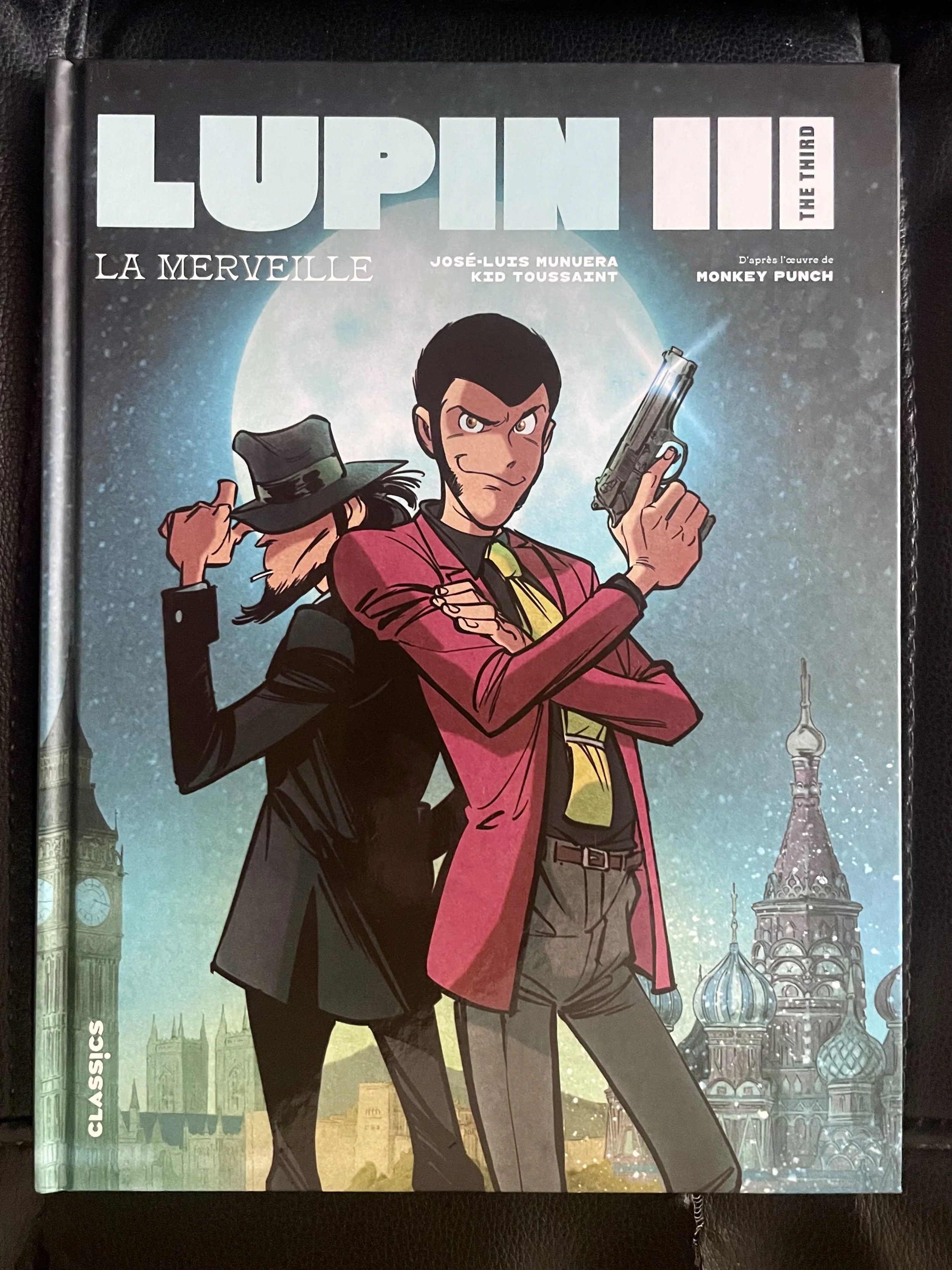
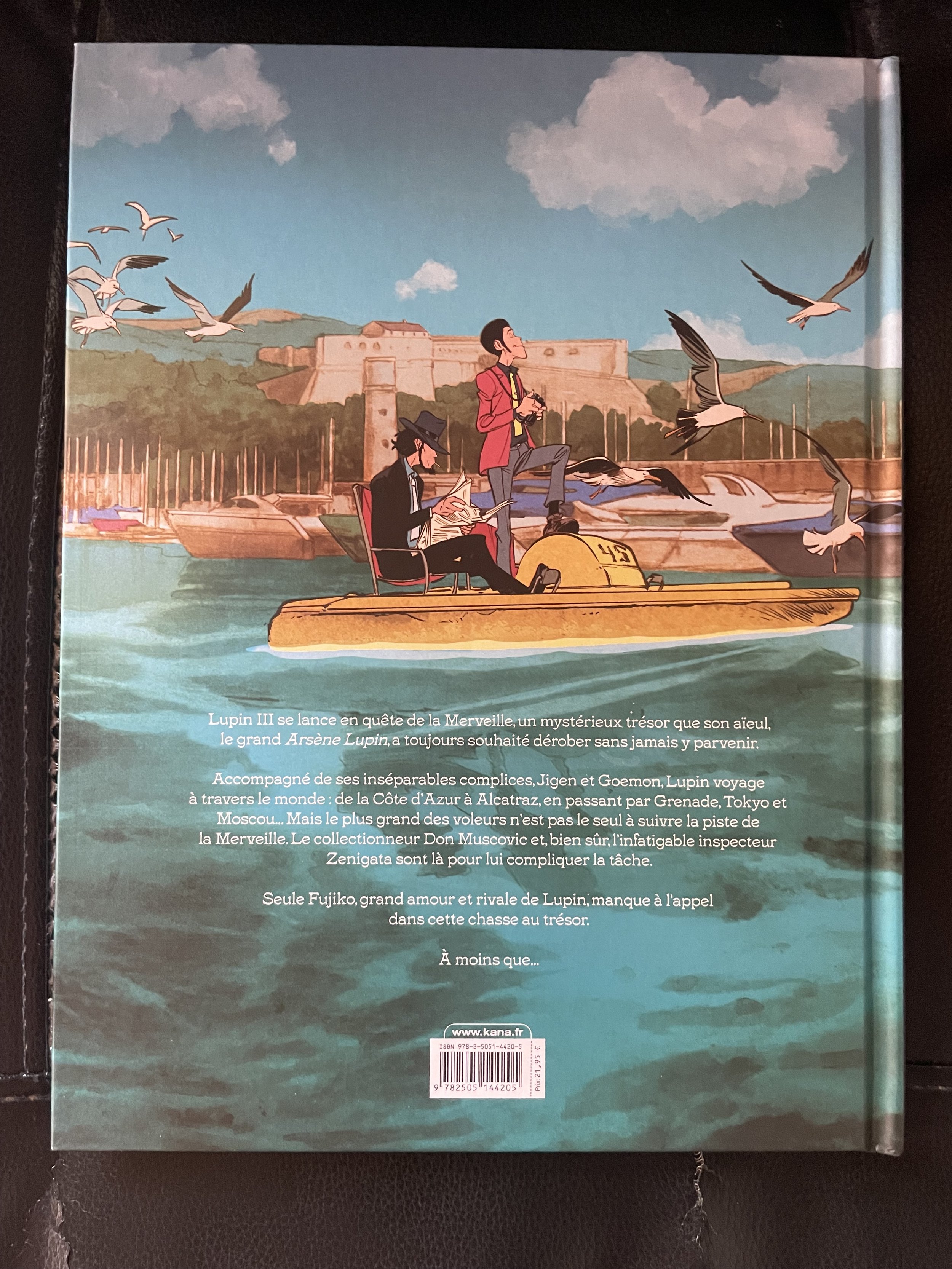
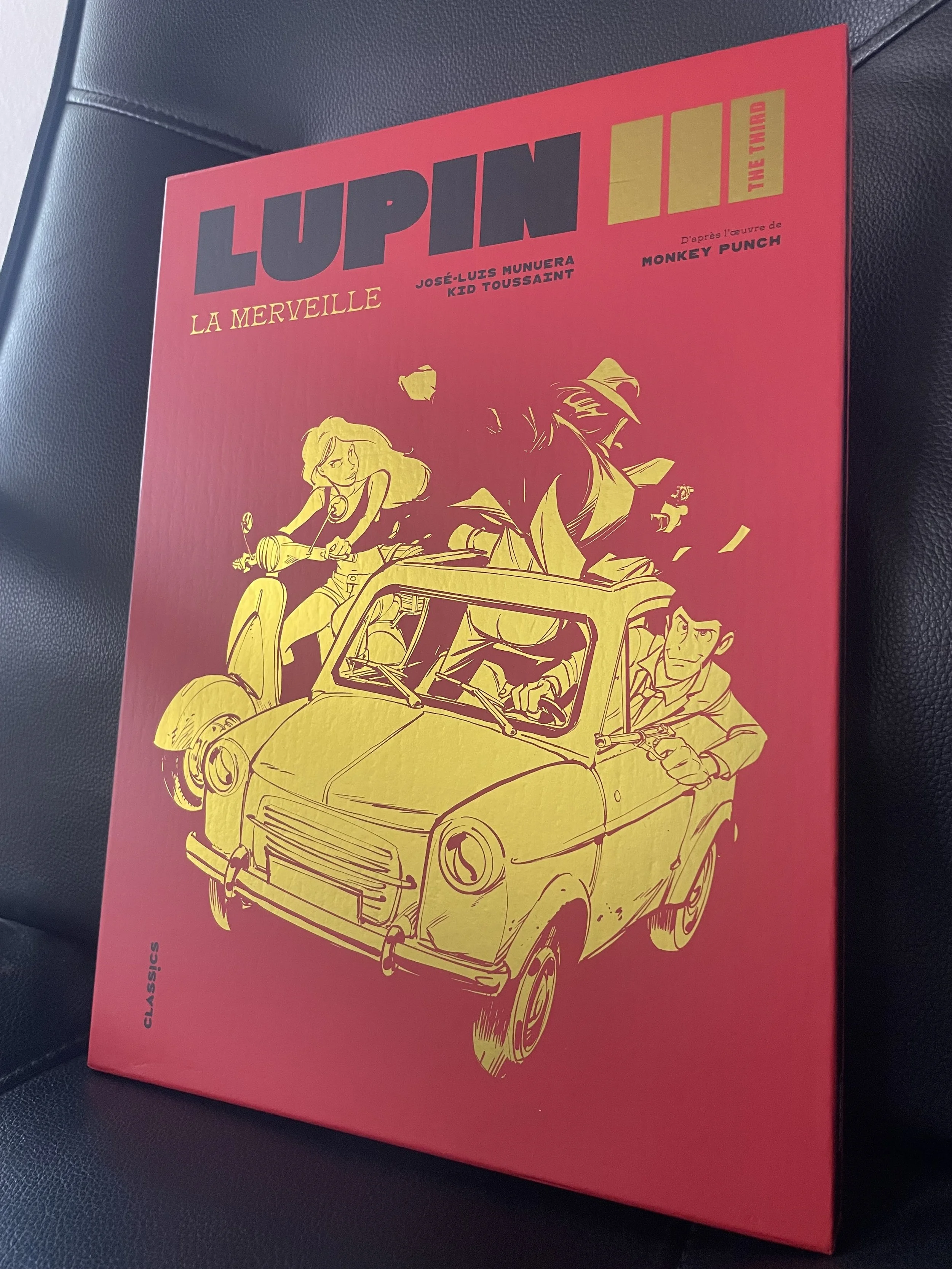
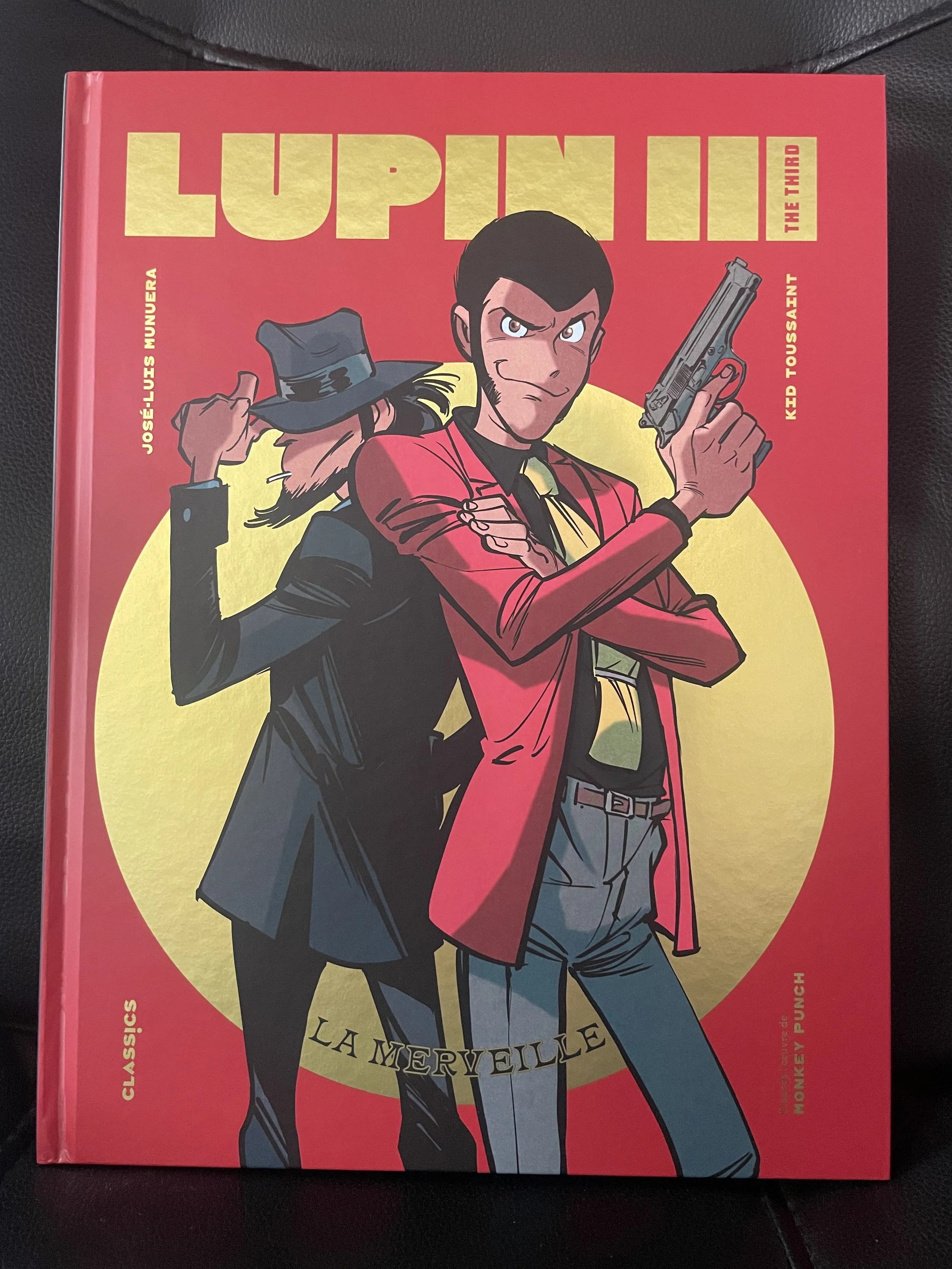
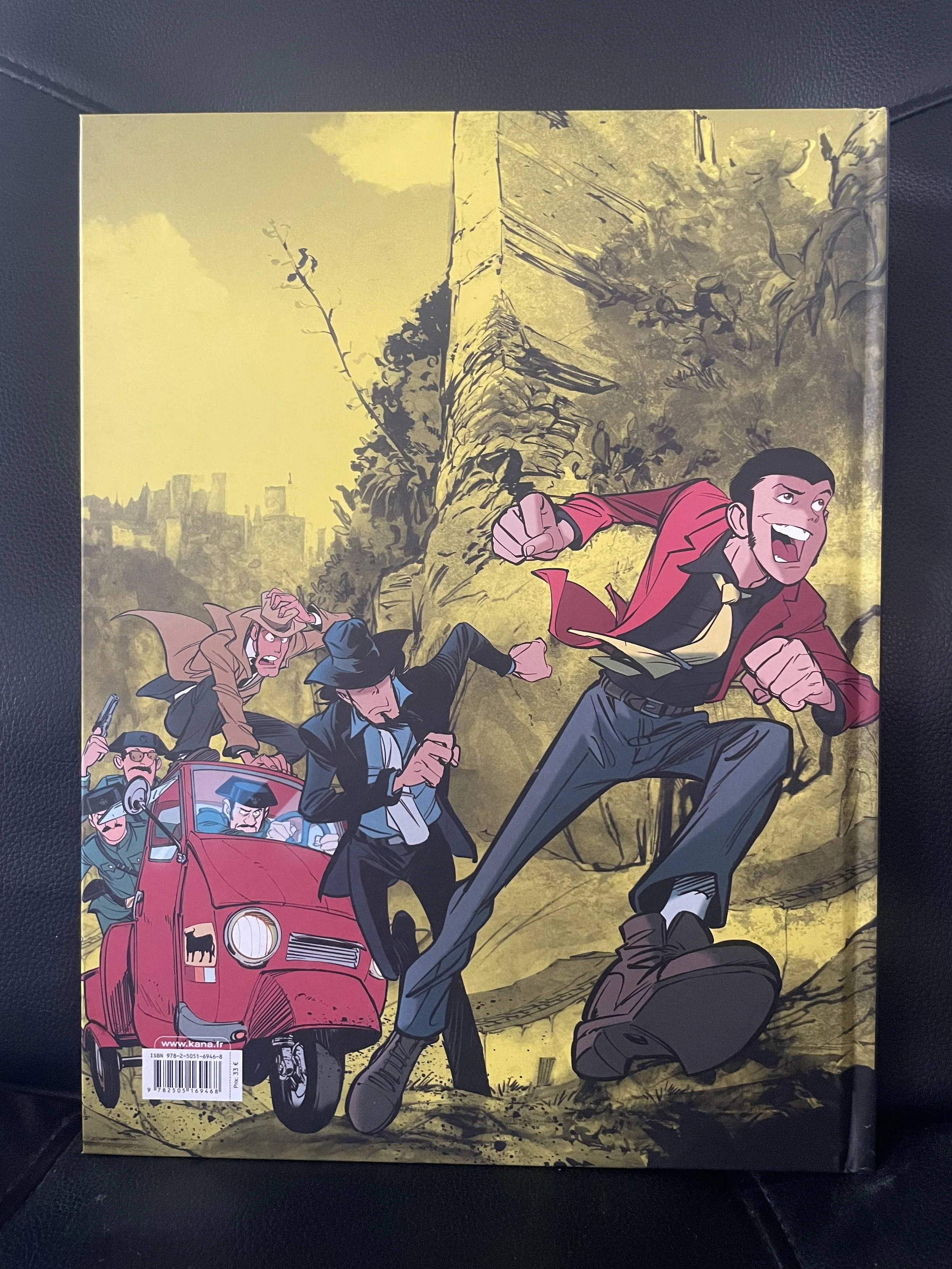
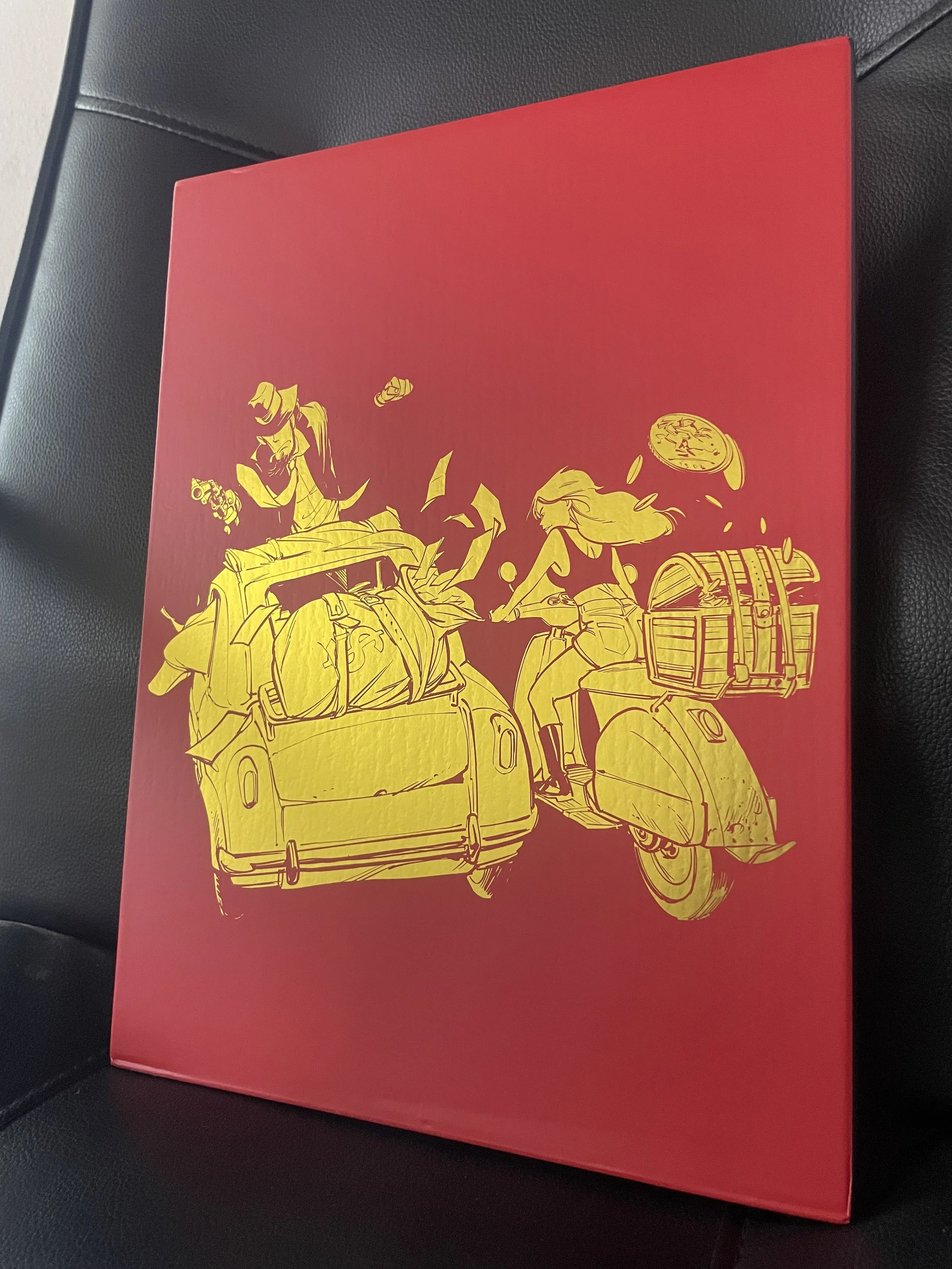
Lupin III - La Merveille can currently be purchased from retail comic and bookstores in France, or online over at BDfugue. The standard edition is currently priced at around €22, whereas the collector’s edition is priced at around €33. A big thanks to the publisher, Kana, for some of the images supplied in this review, and for their efforts in speaking with us for our interview with the team behind this release.
